

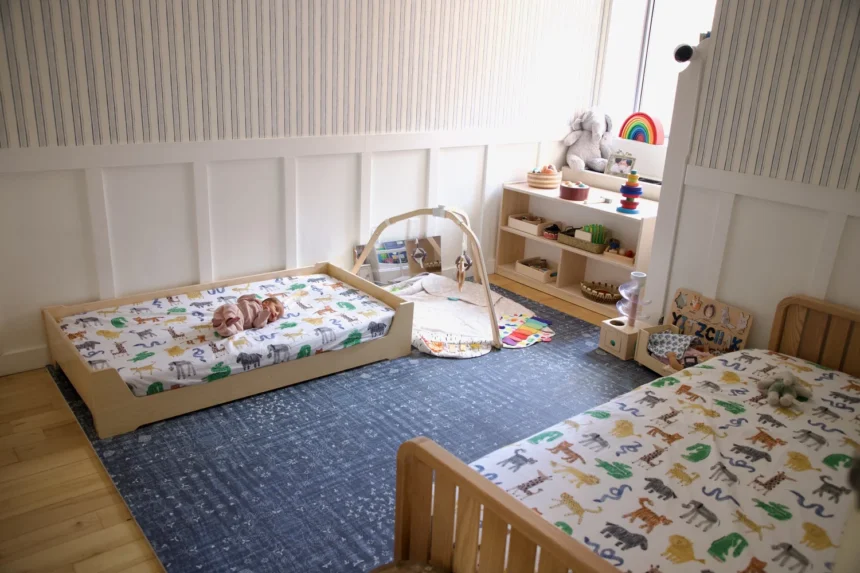
Floor bed or legs – both look perfectly reasonable online, and then you bring one home and realize the height question matters way more than the design ever did.
Let’s actually break down what changes depending on which one you pick.
Why Parents Compare Montessori Floor Beds and Legged Beds
Most parents start this comparison because the beds look different. They stay in it once they realize the differences go way deeper than looks. Age of the child, height safety, how independently the kid can handle the setup day to day, how the bedtime routine holds up over months. All of that ends up tied to one purchase. Once those questions stack up, the design part stops feeling like the main point of the decision at all.
What Is a Montessori Floor Bed?
With a Montessori floor bed, the child never has to call for backup to use their own sleeping space. It sits low enough that toddlers handle it themselves, no climbing involved, no adult on standby. The low height also makes the crib-to-bed switch less jarring since there’s barely a height difference to adjust to. Kids who get that kind of daily access often become more comfortable using their own sleeping space.
What Makes a Legged Bed Different?
A legged bed sits higher and has that classic kids’ furniture look most people recognize instantly. Older children handle the height fine on their own. Toddlers are a different story. That gap from the floor means a parent ends up involved pretty much every time the child wants to get in or settle down, which happens more often than it sounds. For younger kids still figuring out coordination, it also adds a real fall risk that needs active management.
Safety for a Toddler: Low Bed or Higher Frame?
A floor bed minimizes the height-related risk of falls. Rolling off a mattress that’s already on the ground is a non-event even for restless sleepers. Parents of younger children generally find there’s just less to think about at night when the bed itself can’t contribute to an injury. A legged bed needs more thought upfront – the right height for the child’s age, rails that actually hold, and timing that matches when the kid is genuinely ready. Get those details wrong with a younger child and the bed creates more stress than it solves.
Convenience for Parents
Many parents find a floor bed easier to manage day to day. Making the bed takes less effort, cleaning around it is straightforward, and sitting beside the child for bedtime doesn’t involve awkward positioning. Safety monitoring is simpler too since there’s no height to worry about. The room also stays more flexible because a low bed doesn’t dominate the space the way a raised frame with legs tends to, leaving more options for organizing everything around it.
BusyWood Montessori Floor Beds
BusyWood makes Montessori floor beds in natural wood in several formats: open floor models for kids ready to sleep without extra structure, versions with rails for those who need a bit more containment, and house-frame designs for anyone deep in their castle era this month. Solid construction, smooth finishing, clean design that fits into a real kids’ room without demanding too much attention from everything else in the space.
A legged bed has its place, but for toddlers just figuring out independent sleep, a Montessori floor bed removes most of the friction from that process. The setup is safer, and kids handle it on their own from day one. For families where bedtime running smoothly actually matters, that difference is pretty hard to argue with.