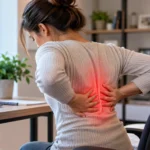

Why Does My Lower Back Hurt on My Period?
Lower back pain during your period is common and can happen alongside cramps, pelvic pressure, fatigue, headaches, or changes in digestion. The discomfort may feel like a dull ache, tightening, throbbing, or pain that spreads from the lower abdomen toward the back and thighs. For many people, it starts shortly before bleeding and improves within a few days.
The main reason is usually the way the uterus contracts during menstruation. Chemical messengers called prostaglandins help trigger these contractions as the uterus sheds its lining, and higher prostaglandin activity can be linked with more severe menstrual pain. Those contractions and nearby pelvic discomfort can be felt in the lower back as well as the abdomen.
Occasional mild back pain around your period is often not a cause for concern. However, severe pain, worsening pain, pain that lasts beyond your period, or pain that interferes with normal activities deserves medical attention. Conditions such as endometriosis, adenomyosis, fibroids, or pelvic infections can sometimes cause more persistent menstrual and pelvic pain.
How Period Cramps Can Cause Lower Back Pain
Menstrual cramps, medically called dysmenorrhea, happen when the uterus contracts to shed its lining. These contractions are influenced by prostaglandins, which rise around the beginning of menstruation. When contractions are stronger, the resulting discomfort can feel more intense and may radiate into the lower back, hips, or thighs.
The pelvis and lower back are closely connected through muscles, nerves, and surrounding tissues. Because of this connection, pain that begins in the uterus or pelvic region may be perceived farther away from its original source. This is known as referred pain and helps explain why period cramps can feel like a backache rather than only abdominal cramping.
The timing of the discomfort can also give you useful clues. Typical menstrual cramps often begin one or two days before bleeding or around the start of a period and gradually settle within two or three days. If your lower back pain follows this predictable pattern every month and remains manageable, menstrual cramps may be the most likely explanation.
What Normal Period-Related Back Pain Feels Like
Period-related lower back pain can feel different from one person to another. Some people notice a steady dull ache, while others describe pressure, throbbing, tightness, or intermittent cramping. The discomfort may occur together with lower abdominal cramps and can sometimes extend toward the hips or upper legs.
Another clue is its relationship with your menstrual cycle. If the pain appears around the same time each month, becomes stronger when your period begins, and fades as your bleeding and cramps settle, it may be connected to menstruation. Keeping track of when pain starts, how long it lasts, and how intense it becomes can make these patterns easier to recognize.
Normal does not necessarily mean you have to tolerate severe discomfort every month. Mild or moderate period pain can be common, but pain that repeatedly prevents you from working, studying, sleeping, exercising, or handling everyday responsibilities deserves a conversation with a healthcare professional.
Endometriosis and Period-Related Lower Back Pain
Endometriosis is one possible reason period pain can become unusually intense or persistent. With endometriosis, tissue similar to the uterine lining grows outside the uterus and can affect areas around the ovaries, fallopian tubes, and pelvic lining. Symptoms can include severe menstrual pain, pelvic discomfort, lower back pain, painful bowel movements, painful urination, or pain during sex.
A key difference is that endometriosis-related pain may be more disruptive than ordinary menstrual cramps. It can become particularly noticeable before or during your period, but some people experience pelvic or back pain at other points in the cycle too. Heavy bleeding, spotting between periods, digestive symptoms, or difficulty becoming pregnant may also occur, although symptoms vary considerably.
Pain intensity alone cannot confirm or rule out endometriosis. Some people with significant endometriosis have relatively mild symptoms, while others experience severe pain that affects daily life. If your period pain has gradually become worse, repeatedly limits your activities, or comes with pain during bowel movements or sex, speaking with a healthcare professional is worthwhile.
Adenomyosis, Fibroids, and Other Possible Causes
Adenomyosis occurs when tissue similar to the uterine lining grows into the muscular wall of the uterus. It can contribute to painful periods, heavier bleeding, pelvic pressure, and discomfort that may extend into the back. Because several gynecological conditions can cause similar symptoms, the pattern of pain alone cannot determine which condition is responsible.
Uterine fibroids are another possible cause of menstrual pain and pressure. These noncancerous growths can occur in or around the uterus and may be associated with heavy bleeding, pelvic discomfort, or lower back pain. Some people have fibroids without noticeable symptoms, while others experience symptoms that become more troublesome around menstruation.
Pelvic inflammatory disease and other pelvic conditions can also cause pain, particularly when symptoms do not follow your usual menstrual pattern. An intrauterine device may temporarily increase period cramping, especially during the first several months after placement. New, unusual, or steadily worsening pain should therefore be assessed rather than automatically attributed to your period.
Could It Be Regular Back Pain Instead?
Not every episode of lower back pain during your period comes from menstruation. Muscle strain, prolonged sitting, awkward movement, poor posture, or an existing back problem can cause discomfort that happens to coincide with your cycle. Back pain may also travel into the buttocks or legs when nerves are irritated, which can feel different from typical menstrual aching.
Pay attention to what makes the pain better or worse. Menstrual discomfort often appears alongside pelvic or abdominal cramping and follows a recognizable cycle, whereas mechanical back pain may become worse after lifting, bending, prolonged sitting, or certain movements. These patterns are not enough to diagnose the cause, but they can help you describe the problem more clearly.
A healthcare professional should assess back pain that persists beyond your usual period pattern, becomes progressively worse, or comes with symptoms such as leg weakness, numbness, tingling, or pain extending down a leg. Back pain accompanied by new bowel or bladder problems, fever, or significant injury requires prompt medical attention.
Ways to Ease Lower Back Pain During Your Period
Heat is a simple option that may help menstrual discomfort. A heating pad or hot-water bottle placed over the lower abdomen or lower back can help relax tense muscles and make cramps feel more manageable. A warm bath or shower may also be soothing, particularly when back discomfort occurs together with abdominal cramping.
Gentle movement may also help some people feel better. Walking, light stretching, yoga, swimming, or easy cycling can keep the body moving without placing excessive strain on painful areas. If movement makes your pain significantly worse, stop and choose a gentler approach rather than forcing yourself through severe discomfort.
Over-the-counter pain medicines may help menstrual cramps for some people. Anti-inflammatory medicines such as ibuprofen or naproxen can reduce prostaglandin activity, but they are not suitable for everyone and may interact with certain health conditions or medicines. Follow the package directions and ask a healthcare professional or pharmacist if you are unsure which option is appropriate for you.
When Period Back Pain Should Be Checked
Consider speaking with a healthcare professional if your period pain has become noticeably more severe, starts affecting your everyday activities, or no longer responds to measures that previously helped. Pain that becomes heavier, more frequent, or different from your usual menstrual pattern is also worth discussing. These changes can sometimes point toward an underlying condition that needs attention.
You should also seek medical advice if menstrual pain comes with unusually heavy bleeding, bleeding between periods, pain during sex, or pain when urinating or having a bowel movement. Persistent pelvic discomfort, abdominal swelling, unexplained weight loss, or changes in bowel or bladder habits should not simply be dismissed as normal period symptoms.
Severe or unusual pelvic or back pain may sometimes need urgent assessment, particularly when it is sudden or accompanied by fever, fainting, significant weakness, new bowel or bladder problems, or other concerning symptoms. If pregnancy is possible and you have significant pelvic pain or bleeding, seek medical advice promptly because some pregnancy-related conditions can be serious.
How a Doctor May Find the Cause
A healthcare professional will usually begin by asking about your menstrual cycle and pain pattern. You may be asked when the pain begins, where you feel it, how long it lasts, whether it spreads, how severe it becomes, and whether it interferes with daily activities. Details about bleeding, bowel symptoms, urinary symptoms, and pain during sex can also be important.
Keeping a menstrual symptom diary can make this conversation more useful. Record the first day of bleeding, the days when your back hurts, pain intensity, bleeding changes, medicines you take, and any other symptoms that appear. Over several cycles, this information can reveal whether the discomfort follows a consistent menstrual pattern or occurs independently of your period.
Depending on your symptoms, a clinician may consider a pelvic examination, laboratory testing, or imaging such as an ultrasound. The exact evaluation depends on your age, medical history, symptoms, and possible causes. If an underlying condition is suspected, identifying it can guide treatment rather than relying only on general pain-relief measures.
How to Track Lower Back Pain During Your Cycle
Tracking your symptoms can help you understand whether your lower back pain is closely connected to menstruation. Note the first day of your period, when the back pain starts, how intense it becomes, and when it disappears. Also record whether you experience abdominal cramps, heavy bleeding, nausea, bowel changes, urinary discomfort, or pain during sex.
It can be useful to describe pain using simple terms such as dull, sharp, throbbing, burning, tight, or cramping. You can also record whether heat, gentle movement, rest, or medication changes the discomfort. This information gives you a clearer picture of what happens across several cycles instead of relying on memory from one particularly painful month.
Patterns matter because ordinary menstrual cramps often follow a fairly predictable timing around menstruation. Pain that begins much earlier, continues long after bleeding ends, appears throughout the month, or becomes progressively worse may deserve further evaluation. A symptom diary cannot diagnose the cause, but it can make a medical discussion more focused and informative.
What Your Lower Back Pain Could Mean
If your lower back hurts during your period, the most common explanation is menstrual cramping associated with uterine contractions. The pain may spread from the pelvis into the lower back, hips, or thighs and usually improves as the period progresses. When the pattern is mild, predictable, and short-lived, it is often consistent with primary dysmenorrhea.
However, unusually severe or changing pain can have another cause. Endometriosis, adenomyosis, fibroids, pelvic inflammatory disease, and other conditions can cause menstrual or pelvic pain that feels different from ordinary cramps. Back problems unrelated to menstruation can also happen at the same time, so the timing of symptoms is helpful but not enough for a diagnosis.
The most important factor is how the pain affects you and whether your usual pattern changes. You do not have to assume that debilitating period pain is something you simply have to endure. If symptoms repeatedly interfere with everyday life or come with unusual bleeding, pelvic symptoms, or concerning back symptoms, professional medical advice can help identify what is happening.
Conclusion
Lower back pain during your period is often connected to menstrual cramps and the contractions that occur as the uterus sheds its lining. Prostaglandins play an important role in this process, and the resulting discomfort can spread into the lower back, hips, or thighs. Mild pain that follows a predictable monthly pattern often settles within a few days.
When pain becomes severe, lasts longer than expected, or changes from your usual pattern, another cause may need consideration. Endometriosis, adenomyosis, fibroids, pelvic conditions, and unrelated back problems can all cause symptoms that resemble ordinary period pain. Tracking your symptoms across several cycles can make it easier to recognize important changes.
Heat, gentle movement, rest, and suitable pain relief may help with uncomplicated menstrual discomfort. Still, recurring pain that disrupts work, school, sleep, exercise, or everyday activities deserves medical attention. If you experience sudden severe pain, fever, neurological symptoms, new bowel or bladder problems, or possible pregnancy with significant pelvic pain, seek prompt medical care.
FAQs
Is lower back pain normal during a period?
Yes, lower back pain can occur with menstrual cramps because period-related contractions may cause pain that spreads from the pelvis into the back. Mild, predictable discomfort that improves within a few days is commonly associated with menstruation.
Why does my lower back hurt more before my period?
Prostaglandin levels rise around the beginning of menstruation and help the uterus contract. Stronger contractions can cause more noticeable cramps and referred pain in the lower back, hips, or thighs.
Can endometriosis cause lower back pain during periods?
Yes. Endometriosis can cause pelvic and lower back pain, particularly before or during menstruation. Severe cramps, heavy bleeding, painful bowel movements, painful sex, or persistent pelvic symptoms can also occur.
When should I see a doctor for period-related back pain?
Seek medical advice when pain becomes severe, worsens over time, disrupts daily activities, or comes with heavy or irregular bleeding, pain during sex, or bowel or urinary symptoms.
What can I do at home for lower back pain during my period?
Heat, warm baths, gentle movement, massage, rest, and suitable over-the-counter pain medicine may help. If symptoms are severe, unusual, or repeatedly interfere with everyday life, speak with a healthcare professional.
Because this is health-related content, I kept the medical claims conservative and aligned with current clinical guidance. I can also write an SEO meta description for this article in the same style.