

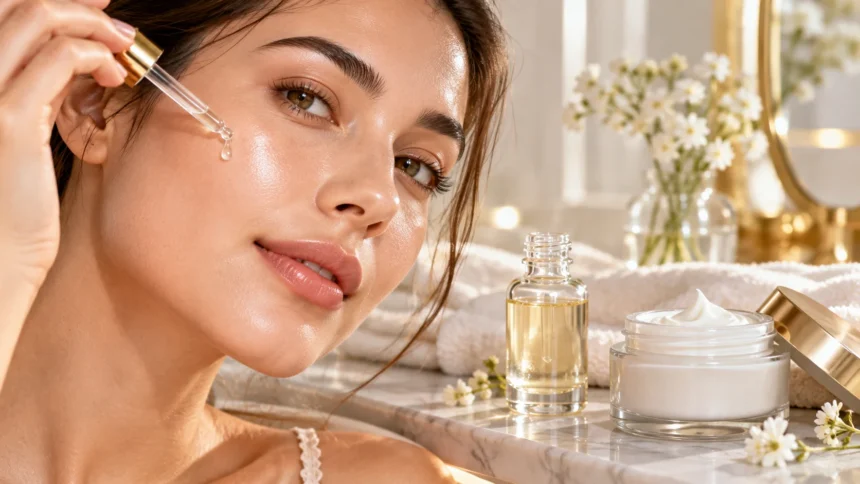
Peptides have become popular ingredients in skincare products because of their potential to support skin hydration, firmness, and a smoother appearance. You can find them in facial serums, moisturizers, eye creams, and anti-aging skincare formulas. Although peptides sound complicated, they are simply short chains of amino acids that perform different functions in the body.
Understanding peptides in skincare can help you decide whether these ingredients deserve a place in your daily routine. Different peptides work in different ways, and their effectiveness depends on the formula, concentration, and overall skincare habits. This guide explains their benefits, types, uses, and limitations to help you make informed decisions.
What Are Peptides in Skincare?
Peptides are short chains of amino acids, which are the building blocks of proteins found throughout the human body. In skincare, peptides are included in topical products designed to support the appearance and condition of the skin. Some are studied for their potential to influence processes related to collagen and skin structure. However, individual peptides differ considerably in their properties and effectiveness.
The skin naturally contains proteins such as collagen and elastin that contribute to its structure and flexibility. Peptides are smaller molecules made from amino acids, but not all peptides can penetrate the skin effectively. Their molecular structure and the formulation surrounding them affect how they behave when applied. Skincare manufacturers develop different peptide ingredients to address specific cosmetic concerns.
Peptide-based skincare products are commonly marketed for fine lines, dryness, and changes in skin firmness. Some ingredients have encouraging laboratory or clinical research, while evidence for others remains limited. Results also depend on the complete formula rather than the presence of peptides alone. Understanding these differences helps set realistic expectations about what peptide skincare can achieve.
How Do Peptides Work in Skincare?
Peptides used in skincare have different proposed mechanisms depending on their chemical structures. Certain peptides are designed to act as signaling molecules involved in processes associated with skin maintenance. Others are developed for moisturizing, conditioning, or supporting the appearance of smoother skin. These mechanisms are not identical, so claims about one peptide should not automatically apply to every peptide ingredient.
Collagen-related peptides attract particular interest because collagen contributes to skin strength and structure. Some topical peptides have been investigated for their ability to influence collagen-related activity in skin cells. However, laboratory findings do not always translate into noticeable improvements when products are applied to human skin. Penetration, stability, and ingredient concentration can affect whether a formula delivers meaningful results.
Peptides also work alongside other skincare ingredients that support hydration and maintain the skin barrier. Moisturizing compounds can temporarily improve the appearance of fine lines by increasing water content in the outer skin layers. When peptides are included in these formulas, it may be difficult to isolate their individual contribution. Evaluating the complete product is therefore more useful than focusing on marketing claims alone.
Benefits of Peptides for Skin
One commonly discussed benefit of peptides is their potential to improve the appearance of fine lines and wrinkles. Certain peptide formulations have shown promising results in small studies, although the strength of evidence varies. These ingredients may contribute to a smoother-looking complexion when used consistently. They should not be expected to produce the same changes as medical or professional cosmetic treatments.
Some peptide-containing products are developed to support skin firmness and elasticity. Their proposed benefits often relate to proteins involved in maintaining the skin’s structure. However, claims about increasing collagen production require evidence specific to the peptide and formulation being studied. A noticeable improvement in skin appearance may also result from moisturizing ingredients included in the same product.
Peptide skincare can offer additional cosmetic benefits when combined with ingredients that maintain hydration and comfort. Well-formulated moisturizers may help reduce the appearance of dryness and improve how the skin feels. Certain peptide products are also designed for sensitive or mature skin, although suitability varies. Overall, peptides are best viewed as potentially useful supporting ingredients rather than guaranteed solutions.
Different Types of Peptides Used in Skincare
Signal peptides are commonly used in formulas intended to improve the appearance of aging skin. They are designed around signaling processes involved in skin maintenance and the production of structural proteins. Palmitoyl pentapeptide-4 is one example frequently discussed in cosmetic skincare research. However, effectiveness depends on the exact ingredient, concentration, and finished product formulation.
Carrier peptides are another category used in skincare, with copper peptides being among the best-known examples. Copper tripeptide-1 is studied for its possible role in processes associated with skin repair and maintenance. These properties have generated interest in cosmetic products targeting skin appearance. Nevertheless, evidence supporting specific consumer products remains more limited than some marketing descriptions suggest.
Neurotransmitter-inhibiting peptides are often promoted for their potential to soften the appearance of expression lines. Acetyl hexapeptide-8 is a familiar example found in certain anti-aging serums. Some marketing descriptions compare its proposed effects with injectable treatments, but topical peptides should not be considered equivalent. Their ability to produce visible results depends on whether sufficient amounts reach relevant skin layers.
Copper Peptides and Their Skincare Benefits
Copper peptides combine a peptide structure with copper, a trace mineral involved in several biological processes. Copper tripeptide-1, sometimes identified as GHK-Cu, is a commonly discussed ingredient in cosmetic formulations. Researchers have examined its involvement in tissue maintenance and repair-related activity. These findings have encouraged manufacturers to include copper peptides in serums and moisturizers.
Copper peptide products are frequently marketed for improving the appearance of skin texture, firmness, and fine lines. Some preliminary research suggests potentially useful properties, but stronger human clinical evidence is needed for many claims. Product results may also reflect the effects of other ingredients. Consumers should therefore approach dramatic transformation promises with reasonable caution.
Copper peptides are not automatically suitable for every skin type simply because they are widely promoted. Their tolerability depends on the product’s concentration, surrounding ingredients, and individual skin sensitivity. Applying a small amount to a limited area before regular use can help identify potential irritation. Anyone experiencing persistent discomfort should discontinue the product and seek professional advice when appropriate.
Do Peptides Help With Fine Lines and Wrinkles?
Fine lines and wrinkles develop through several processes, including natural aging, repeated facial movements, and environmental exposure. Changes in collagen, elastin, and skin hydration can also influence their appearance. Certain peptides are studied for potential effects on skin-related biological activity. However, the evidence supporting wrinkle reduction varies substantially between ingredients and formulations.
Some clinical studies have reported modest improvements in wrinkle appearance after regular use of particular peptide-containing products. Many studies are relatively small, short, or involve formulas with several active ingredients. This makes it difficult to determine exactly how much improvement comes from the peptide itself. Results should not be generalized to every product carrying a peptide label.
Peptide skincare may be a reasonable addition to a routine focused on maintaining healthy-looking skin. However, daily sun protection has much stronger evidence for preventing premature signs of skin aging. Moisturizers can also reduce the visible appearance of dryness-related fine lines. Combining these established practices with suitable peptide products is more practical than expecting peptides to work independently.
Can Peptides Improve Skin Firmness and Elasticity?
Skin firmness and elasticity are influenced by structural proteins, hydration levels, and natural biological changes. Collagen helps maintain the skin’s supportive framework, while elastin contributes to its ability to stretch and recover. Certain peptides have been studied for possible effects on these processes. Researchers continue to investigate how effectively topical products influence visible firmness.
Some peptide formulations may improve the appearance of skin texture and firmness over time. However, improvements reported in studies are not necessarily dramatic or consistent across all users. Skin type, product formulation, environmental exposure, and individual differences can influence outcomes. A moisturizer containing peptides may also make the skin look temporarily smoother through improved hydration.
Supporting skin elasticity involves more than applying one cosmetic ingredient. Consistent moisturizing, gentle cleansing, and protection from excessive ultraviolet exposure contribute to overall skin care. Adequate sleep and balanced nutrition also support general health, including normal skin function. Peptides can be considered an optional addition to these foundational practices rather than a replacement.
Peptides for Skin Hydration and Moisture
Hydration is essential for maintaining a comfortable skin surface and reducing the appearance of dryness. Some peptide-containing products are designed to improve skin conditioning and moisture retention. However, peptides are not universally powerful humectants, and their moisturizing effects depend on the specific ingredient. Many formulas rely heavily on established hydrating compounds to deliver noticeable softness.
Ingredients such as glycerin, hyaluronic acid, and panthenol are frequently combined with peptides in facial serums. These ingredients help attract or retain water in the outer layers of the skin. The resulting hydration can temporarily make fine lines less noticeable. When evaluating peptide moisturizers, the entire ingredient list is important for understanding the product’s likely benefits.
People with dry skin may prefer peptide creams containing emollients and barrier-supporting ingredients. Those with oily skin might find lighter lotions or water-based serums more comfortable. Choosing the right texture can encourage consistent use without unnecessary heaviness. Regardless of skin type, a well-formulated moisturizer often provides more predictable hydration than peptides alone.
Peptides and the Skin Barrier
The skin barrier helps retain moisture while protecting the body from environmental irritants. Its outermost layer contains skin cells surrounded by lipids that contribute to normal barrier function. When this protective system becomes disrupted, the skin may feel dry, rough, or uncomfortable. Maintaining the barrier is an important goal of a gentle skincare routine.
Certain peptide-containing formulas are marketed for their ability to support skin repair and barrier maintenance. Although some peptide ingredients have interesting biological properties, direct evidence for barrier improvement varies. Products containing ceramides, glycerin, and other established moisturizing ingredients may provide much of the benefit. Ingredient combinations should therefore be assessed rather than attributing every effect to peptides.
For skin that feels sensitive or easily irritated, simpler products are often more comfortable than complicated formulas. A fragrance-free moisturizer containing suitable barrier-supporting ingredients may be a practical starting point. Peptides can be included when tolerated, but they are not essential for maintaining healthy skin. Persistent irritation or unusual symptoms should be discussed with a healthcare professional.
Peptides vs Retinol: What’s the Difference?
Peptides and retinol are different categories of skincare ingredients with distinct properties and evidence bases. Peptides are short amino acid chains developed for various cosmetic functions. Retinol is a vitamin A derivative commonly used in products targeting uneven texture and signs of photoaging. Its effects involve biological pathways associated with skin cell behavior and renewal.
Retinol has stronger clinical evidence than most topical peptides for improving certain signs of sun-related skin aging. However, retinol can sometimes cause dryness, irritation, or sensitivity, particularly when first introduced. Peptide-containing products are often formulated to be gentle, although this depends on the full formula. Neither ingredient is universally suitable for every person or skincare concern.
Choosing between peptides and retinol depends on individual skin needs, tolerability, and desired outcomes. People seeking basic moisturizing support may find a peptide-containing cream comfortable and convenient. Those considering retinoids for specific concerns can discuss suitable options with a dermatologist. Using sunscreen and maintaining a gentle routine remain important regardless of which ingredient is selected.
Peptides vs Hyaluronic Acid: Which Is Better?
Peptides and hyaluronic acid serve different purposes in skincare, so comparing them directly can be misleading. Hyaluronic acid is a humectant that attracts and holds water, helping the skin feel hydrated. Peptides are a broader ingredient category with functions that vary by their specific structures. Some peptide formulas target cosmetic concerns beyond immediate hydration.
Hyaluronic acid is commonly used in moisturizers and serums because of its well-established water-binding properties. It can temporarily improve the appearance of dry, dehydrated skin and fine lines associated with moisture loss. Peptide benefits are generally more ingredient-specific and may be less predictable. Their effects often require evaluation over longer periods rather than immediately after application.
A skincare product can contain both peptides and hyaluronic acid without these ingredients competing with each other. Hyaluronic acid can provide hydration while selected peptides contribute other intended cosmetic functions. Such combinations are common in facial serums and moisturizing creams. Choosing a comfortable, effective formula is usually more important than selecting products based on one featured ingredient.
How to Use Peptides in Your Skincare Routine
Peptide skincare products are available in several formats, including serums, moisturizers, and eye creams. The appropriate application method depends on the product’s texture and manufacturer instructions. A peptide serum is commonly applied after cleansing and before a thicker moisturizer. However, not every formulation follows the same layering requirements, so product directions should take priority.
In a morning routine, peptides can be incorporated alongside gentle cleansing, moisturizing, and broad-spectrum sunscreen. Sunscreen remains especially important because ultraviolet exposure contributes to premature skin aging. Peptide products do not replace sun protection or provide reliable protection against UV damage. A consistent routine built around essential skincare steps is generally more useful than applying numerous active ingredients.
Evening routines can also include peptide serums or moisturizing creams according to product directions. People using multiple active ingredients should pay attention to irritation rather than assuming every combination is appropriate. Introduce new products gradually so unwanted reactions are easier to recognize. If persistent redness, burning, or discomfort develops, stop using the product and seek appropriate guidance.
Can You Use Peptides With Vitamin C and Niacinamide?
Peptides are often included in skincare routines that also contain vitamin C or niacinamide. These ingredients have different cosmetic purposes, and many finished formulations are designed to work together. Niacinamide is commonly used for skin barrier support and the appearance of uneven tone. Vitamin C is used in products targeting antioxidant protection and visible skin discoloration.
Most peptide products can be incorporated into routines containing these ingredients when the formulas are compatible and well tolerated. However, compatibility depends on factors such as pH, ingredient stability, and the complete formulation. Broad claims that all peptides become ineffective when combined with vitamin C are oversimplified. Manufacturer guidance is especially useful for specialized peptide formulations.
Using several active products at once can sometimes irritate sensitive skin even when the ingredients are chemically compatible. People should pay attention to how their skin responds and avoid unnecessary layering. A simple routine with a few suitable products is often easier to maintain. More ingredients do not automatically produce better or faster cosmetic results.
Are Peptides Safe for All Skin Types?
Topical peptides are generally considered well tolerated in many cosmetic skincare formulations. However, the safety of a particular product depends on its complete ingredients, concentration, and intended use. Preservatives, fragrance, and other added compounds may cause irritation in some individuals. Therefore, products labeled as peptide-based are not automatically suitable for everyone.
People with sensitive skin may prefer fragrance-free formulas with shorter ingredient lists. A small-area patch test can help identify some unwanted reactions before using a product more widely. However, patch testing cannot guarantee that irritation or allergy will never occur. Individuals with existing skin conditions should consider professional advice when introducing unfamiliar active ingredients.
Side effects from peptide skincare products may include redness, itching, or irritation in sensitive individuals. These reactions may come from the peptide itself or another ingredient in the formulation. Stop using a product if an uncomfortable reaction develops, and seek medical attention for severe symptoms. Choosing reputable products and following their directions helps reduce unnecessary risks.
How Long Do Peptides Take to Show Results?
The time required to notice changes from peptide skincare depends on the ingredient, formulation, and intended benefit. Moisturizing products may make skin feel softer soon after application because of their hydrating ingredients. Improvements in the appearance of fine lines or firmness, when they occur, may take longer. Not every peptide product has evidence demonstrating a predictable timeline.
Some cosmetic studies evaluate peptide-containing products over periods of several weeks or months. These timelines reflect the study conditions rather than guaranteed results for every consumer. Differences in skin condition, product consistency, and overall skincare habits can influence outcomes. Immediate or dramatic improvements should not be expected from topical peptides.
Instead of focusing exclusively on rapid changes, consider whether a product feels comfortable and supports your skincare goals. Consistent use according to manufacturer instructions makes it easier to assess its effects. If a product causes irritation or provides no meaningful benefit, continuing it is not necessary. Healthy skin does not require an extensive collection of expensive active ingredients.
How to Choose the Best Peptide Skincare Products
Choosing a peptide skincare product begins with identifying your main concern, whether it involves dryness, texture, or the appearance of fine lines. Different products contain different peptides and supporting ingredients. A moisturizer may be more appropriate for dry skin, while a lightweight serum may suit someone who prefers simpler layering. Product selection should reflect individual comfort and practical needs.
Check the ingredient list for recognized peptide names such as palmitoyl tripeptide-1, palmitoyl pentapeptide-4, or copper tripeptide-1. However, the presence of a familiar name does not guarantee clinical effectiveness. Ingredient concentration, formulation stability, and supporting research are also important. Be cautious of products promising dramatic changes without reliable evidence.
Packaging, price, and brand transparency can also influence a purchasing decision. Products should provide clear usage instructions, ingredient information, and appropriate storage recommendations. More expensive skincare is not automatically more effective than affordable alternatives. Selecting a reasonably priced formula that suits your skin and routine is often the most sustainable approach.
Common Myths About Peptides in Skincare
One common myth is that every peptide stimulates collagen production and removes wrinkles. In reality, peptides are a diverse category of ingredients with different functions and levels of supporting evidence. Some have been studied for collagen-related effects, while others serve different cosmetic purposes. A product containing peptides should not automatically be expected to reverse visible skin aging.
Another misconception is that peptides can replace established skincare essentials such as moisturizer and sunscreen. Although some peptide-containing products provide useful cosmetic benefits, they do not block ultraviolet radiation. They also cannot guarantee adequate hydration without suitable moisturizing ingredients. Consistent sun protection and gentle skin care remain essential parts of maintaining skin health.
Some people also assume that higher peptide concentrations always produce better results. The effectiveness of an ingredient depends on more than the amount included in a product. Stability, delivery, formulation compatibility, and clinical evidence all matter. Choosing products based on credible information is more useful than relying on impressive-sounding ingredient percentages or advertising claims.
Conclusion
Peptides are versatile skincare ingredients that have attracted attention for their potential to improve the appearance of fine lines, firmness, and overall skin texture. Different peptide types have different proposed functions, and research continues to explore their cosmetic applications. Although certain formulations show promising results, evidence varies, and no peptide product can guarantee noticeable improvements.
Understanding how peptides compare with ingredients such as retinol, hyaluronic acid, and niacinamide can help simplify skincare decisions. Some people may enjoy using peptide serums or moisturizers, while others may find that basic products meet their needs. Skin comfort, product quality, and consistency are generally more important than following every new skincare trend.
The best approach is to treat peptides as optional additions to a balanced skincare routine. Gentle cleansing, effective moisturizing, and regular sunscreen use provide a strong foundation for maintaining healthy skin. By choosing suitable products and keeping realistic expectations, you can decide whether peptide skincare offers meaningful benefits for your individual needs.
Frequently Asked Questions
What do peptides do for your skin?
Certain peptides are used in skincare products to support the appearance of smoother, firmer, or better-hydrated skin. Their actual benefits depend on the specific peptide, formulation, and available clinical evidence.
Are peptides better than retinol?
Peptides and retinol have different functions. Retinol generally has stronger evidence for improving certain signs of photoaging, while some peptide formulations may provide additional cosmetic benefits with potentially different tolerability.
Can I use peptides on my face every day?
Many peptide skincare products are designed for daily use when applied according to their instructions. However, frequency depends on the complete formula, and people with sensitive skin should monitor for irritation.
Do peptides actually help with wrinkles?
Some peptide-containing formulations have shown modest improvements in wrinkle appearance in clinical studies. However, research quality varies, and results cannot be guaranteed for every product or individual.
Can peptides be used with hyaluronic acid?
Yes, peptides and hyaluronic acid are commonly combined in skincare products. Hyaluronic acid supports hydration, while certain peptides are included for additional cosmetic purposes. Their suitability depends on the complete formulation.