

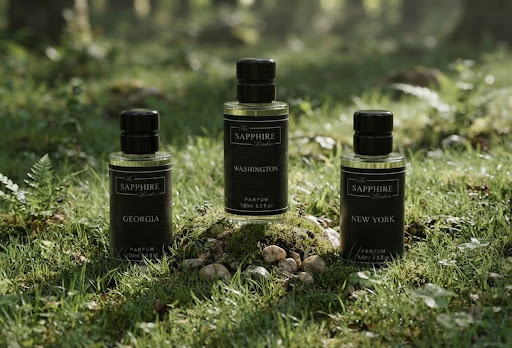
For years, a spray of a French or Italian fragrance on your wrist carried a cost that matched its luxury. A 100ml bottle of an eau de parfum could easily cost £100 or more, not counting the extra fees that come with limited‑edition releases. Recent years have seen a change in UK beauty shops and online markets, and it is not only about cutting expenses.
A new wave of “the sapphire fragrances” is changing the way Britons think about scent, value and what luxury really means.
The Rise of Dupe Culture
Dupe culture, the search for high‑quality, affordable substitutes for products, has spread across almost every beauty category, from skincare to handbags. Fragrance has become one of its active areas. Social media is full of people comparing budget options to designer originals, tasting scents that’re almost the same and telling exactly which bottle matches which.
This is not the knock‑off perfume of decades ago sold in market stalls to trick buyers. Today’s The sapphire fragrances are a more advanced category. They are made by perfumers who study scent blends, source ingredients, and sell their products openly as alternatives rather than copies. Trusted brands never say they are the original; they try to give a scent experience at a lower price.
Trusted brands in this field never claim to be the original. They focus on delivering a scent that feels similar but costs a fraction of the original.
Why the Price Gap Is So Enormous
To understand why a designer bottle costs so much, note that only a small part of that price comes from what is actually inside the glass.
In the fragrance world, the perfume oils and alcohol base are a small part of the final price. Most of the cost goes to:
- Brand licensing fees and celebrity deals
- Fancy glass bottles, packaging and box design
- Advertising campaigns, magazine ads and promotion
- Retail mark‑ups at steps in the chain
- Rent for flagship stores on Bond Street or Knightsbridge
Designer‑inspired perfumes cut most of that overhead. Many sell online, use simple but still nice packaging, and skip celebrity deals. The remaining cost is lower, so they can put money into the perfume oils, sometimes at levels that match or even beat the original perfumes.
Popular Designer‑Inspired Picks UK Shoppers Are Searching For
People search for famous original perfumes that became popular on Instagram and TikTok as well as at perfume counters. Some of the most asked‑for alternatives now are:
- Bleu de Chanel‑inspired scents
- Chanel No.5‑inspired scents
- Dior Sauvage‑inspired scents
- Baccarat Rouge 540‑inspired scents
- Creed Aventus‑inspired scents
- YSL Libre‑inspired scents
- Yves Saint Laurent Black Opium‑inspired scents
- Tom Ford Oud Wood‑inspired scents
The range covers citrus scents, sweet floral perfumes,s and heavy oud blends, showing how wide the demand has become. Shoppers are not after one kind of dupe. They want their favourite scents or the scent a friend wore at a price that needs no extra thinking. Our best-selling perfumes: Baccarat Rouge 540‑inspired scents, Creed Aventus‑inspired scents, etc.
It’s Not Just About Saving Money
Even though the low price is clear, shoppers in the UK choose this category for reasons beyond a tag.
Experimentation without the guilt
With a bottle costing about £15–£30 of £80–£150 shoppers can create a rotating perfume wardrobe. One scent for work, another for a date, a third for exercise. Without the money pressure that once made perfume buying feel like a big choice.
A pushback against “logo tax”
Younger buyers are more and more doubtful about paying extra for a brand name. They resist the idea that a name alone decides value, echoing changes already happening in fashion and skin care.
Accessibility in an economy
The cost‑of‑living squeeze makes extra spending hard for many UK households. Designer‑inspired perfumes let people keep self‑care rituals and personal style without giving up money on other things.
The Quality Question
Sceptics understandably ask: can a £20 perfume really compare to a £100 perfume? The honest answer is nuanced.
Longevity and sillage, which mean how a perfume scent projects, depend heavily on the concentration of fragrance oil used and the quality of the alcohol base. The strongest brands in this area have invested in improving both, and many now offer eau de parfum‑strength concentrations of weaker eau de toilette or cologne dilutions that were once typical of budget perfumes.
Designer‑inspired brands can still fall short in complexity and finish. The way a perfume evolves over several hours, unfolding through top, heart, and base notes. Master perfumers spend years refining a signature perfume, and that depth of craftsmanship is genuinely hard to replicate at scale. For the wearer, however, the gap between a well‑made alternative and its £120 inspiration is often far smaller than the price difference suggests.
How to Shop the Category Responsibly
As with any fast‑growing market, quality varies widely. A few checks go a long way:
- Look for transparency. Reputable brands are upfront that they offer perfumes “inspired by” or “in the style of” well‑known scents, not passed off as the real thing.
- Check the concentration. Look for EDP (eau de parfum) rather than lower‑strength formulas if longevity matters to you.
- Read reviews. Perfume communities on Reddit and TikTok are a rich source of honest side‑by‑side comparisons.
- Be wary of anything claiming to be “designer perfume at suspiciously low prices. That points to counterfeit goods, a separate and legally murkier issue from legitimate inspired perfume.
A Democratisation, Not a Trend
What is happening in the UK perfume market reflects something bigger than a passing social‑media moment. It is part of a recalibration of how consumers assign value. Questioning whether a name on a bottle should cost ten times what is inside it.
Designer‑inspired perfumes are unlikely to replace luxury perfume; there will always be a market for heritage houses, artisanal perfumers and the theatre of high‑end scent. For many Britons who simply want to smell wonderful without the financial hangover, this new generation of alternatives has permanently changed the calculation.
The luxury tax was never really about the luxury at all.