
Fashion e-commerce has always depended on compelling visuals. From boutique brands to large online retailers, high-quality product photography helps shoppers understand fit, style, color, and overall appeal before making a purchase. Traditionally, creating these images required planning studio sessions, hiring photographers and models, coordinating wardrobes, and managing extensive post-production work. Today, artificial intelligence is changing that process by giving fashion teams new ways to create professional visuals more efficiently while maintaining creative flexibility.
One of the most significant developments is the ability to generate realistic product imagery from existing photographs rather than organizing a new shoot for every collection or product variation. AI-powered platforms can transform a single product image into multiple visual formats, allowing brands to build richer product catalogs without repeating the same production process for every SKU.
From Traditional Photoshoots to AI-Generated Visuals
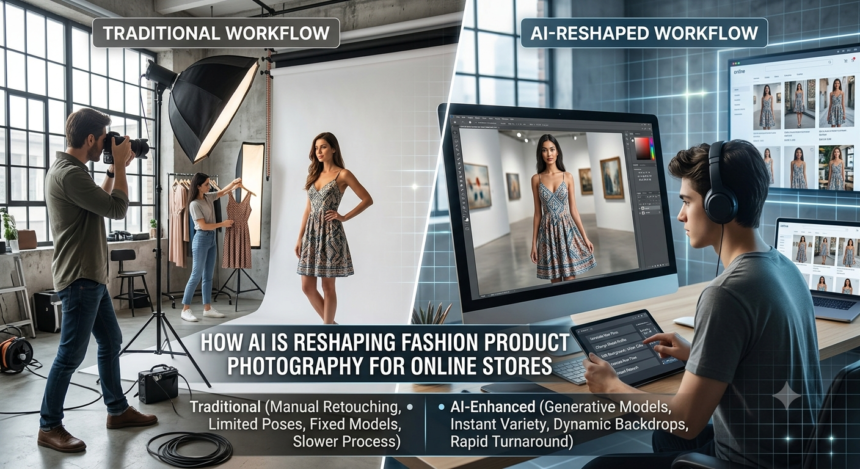
Conventional fashion photography involves many moving parts. Products must be shipped to a studio, garments prepared, models scheduled, lighting arranged, and photographers hired to capture consistent imagery. Even after the shoot, editors spend hours refining the final images before they are ready for publication.
AI introduces a different workflow. Instead of beginning with a complete studio production every time, retailers can use existing garment images as the starting point. Modern AI systems can generate clean packshots, realistic On-Model presentations, and multiple styling variations while preserving important product details. This allows brands to respond more quickly to seasonal collections, limited releases, and inventory updates.
For growing online stores, this approach can reduce production bottlenecks while helping marketing and merchandising teams maintain consistent visual standards across an entire catalog.
Lower Costs Without Sacrificing Flexibility
Photography remains an important investment for fashion businesses, but traditional productions can become expensive when products are updated frequently or offered in multiple colors and sizes.
AI-generated imagery provides an alternative for many catalog-building tasks by reducing the need for repeated studio sessions. Instead of arranging new shoots whenever inventory changes, teams can generate additional visual assets using existing product photography.
This workflow can be especially valuable for brands that launch new collections regularly or sell large product catalogs requiring consistent presentation across hundreds or thousands of listings.
Faster Time-to-Market
Speed plays a major role in online retail. Fashion trends evolve quickly, and customers often expect new arrivals to appear online shortly after products become available.
Because AI image generation removes many scheduling and production constraints, creative teams can prepare product imagery much faster than traditional workflows alone. New garments can move from inventory to published product pages with fewer delays, allowing businesses to keep pace with changing collections and seasonal campaigns.
This faster turnaround also benefits internal teams by reducing the coordination required between photographers, designers, editors, and marketing departments.
Easier Catalog Updates
Fashion catalogs are rarely static. Products are discontinued, new colorways arrive, seasonal promotions begin, and visual branding evolves over time.
AI simplifies these ongoing updates by making it easier to refresh existing product imagery instead of recreating every photograph from scratch. Retailers can maintain visual consistency across their websites while adapting images for different campaigns, marketplaces, or regional storefronts.
For example, a merchandising team may want a consistent appearance across hundreds of listings while introducing updated styling for a new season. AI makes these adjustments significantly easier to manage than scheduling multiple new photography sessions.
More Variety in Models and Styling
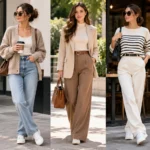
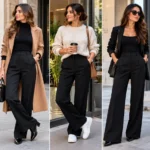
Modern online shoppers appreciate seeing clothing presented in different ways. Diverse model representation, multiple styling options, and varied campaign aesthetics help customers better visualize how garments may look in different contexts.
AI allows creative teams to experiment with different model appearances, poses, backgrounds, and presentation styles without repeating the entire production process. Rather than relying on a single photoshoot, brands can generate multiple visual concepts from the same product image while maintaining a cohesive brand identity.
This flexibility also supports international marketing, where different campaigns may require distinct creative directions for different audiences.
Practical Applications for Fashion E-Commerce Teams
AI-powered product photography is becoming useful across many areas of fashion retail operations. Product managers can create catalog-ready images more efficiently, while marketing teams can develop campaign assets for promotions, social media, email marketing, and digital advertising.
Merchandising teams benefit from having consistent imagery throughout an online store, making product pages feel more professional and easier for shoppers to browse. Customer experience also improves when products are displayed clearly from multiple perspectives and presentation styles.
One example is the ability to turn a flat-lay into on-model photos using AI. Solutions such as On-Model enable fashion businesses to generate on-model images, clean packshots, campaign visuals, and alternative presentations from existing product photographs through a web application or API, reducing the need for a dedicated studio session for every individual item.
Looking Ahead
Artificial intelligence is not replacing creativity in fashion photography; instead, it is expanding the creative possibilities available to brands of every size. Designers, photographers, and marketers continue to shape the visual identity of a collection, while AI helps streamline repetitive production tasks and accelerate content creation.
As fashion e-commerce continues to evolve, AI-generated imagery is becoming an increasingly practical addition to traditional photography workflows. By enabling faster catalog updates, lowering production costs, increasing styling flexibility, and supporting a wider range of visual presentations, AI is helping online retailers create engaging shopping experiences while adapting more efficiently to the fast-moving demands of modern fashion retail.