

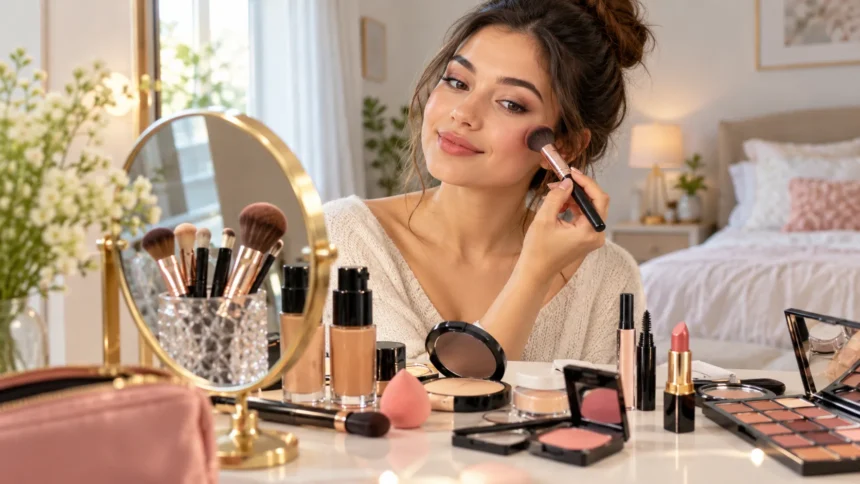
Learning how to apply makeup step by step for beginners at home can feel confusing when you are unfamiliar with beauty products and makeup techniques. With so many brushes, foundations, and tutorials available, knowing where to start is not always easy. However, creating a simple makeup look does not require expensive products or professional skills.
A beginner-friendly makeup routine focuses on preparing your skin, applying products in the right order, and blending everything carefully. You can start with a few basic products and gradually explore different makeup styles. The most important thing is to find an approach that feels comfortable and works for your preferences.
This guide explains each step of applying makeup at home, from skincare preparation to the finishing touches. Whether you prefer natural everyday makeup or want to experiment with new looks, these easy makeup tips will help you practice with confidence.
Step 1: Prepare Your Skin Before Applying Makeup
Preparing your skin is the first step in creating a comfortable and smooth makeup application. Clean skin provides a fresh surface for foundation, concealer, and other cosmetic products. Start by washing your face with a gentle facial cleanser that suits your skin type. Pat your face dry using a clean towel instead of rubbing it roughly.
After cleansing, apply a lightweight moisturizer to keep your skin hydrated throughout the day. Moisturizing helps prevent makeup from collecting around dry patches and improves how foundation blends across your face. Choose a moisturizer based on your skin’s needs, whether your skin tends to feel dry, oily, or somewhere in between. Allow the product to absorb before continuing.
If you are applying makeup during the daytime, include a broad-spectrum sunscreen with SPF 30 or higher in your skincare routine. Apply it according to the product directions and let it settle before makeup. Sunscreen helps protect your skin from harmful ultraviolet rays and supports everyday skin health. A good skincare routine also makes makeup application more comfortable.
Step 2: Apply Makeup Primer for a Smooth Base
Makeup primer is an optional product that prepares your skin for foundation and other face makeup. It can help makeup apply evenly and may improve how long certain products remain in place. Beginners can choose a simple primer based on their preferences and skin type. Some formulas provide hydration, while others create a more matte appearance.
To apply primer, place a small amount on clean fingertips and gently spread it across your face. Focus on areas where you want a smoother-looking makeup base, such as your forehead, nose, and cheeks. Avoid using too much product because excess primer can sometimes cause makeup to separate. A thin layer is usually enough.
After applying primer, allow it to settle before moving on to foundation. Follow the instructions on your chosen product because drying times can vary between formulas. You can also skip primer entirely if your moisturizer already provides a comfortable base. For beginners learning basic makeup techniques, understanding your products matters more than adding unnecessary steps.
Step 3: Choose and Apply the Right Foundation
Foundation is a makeup product designed to create a more even-looking complexion while allowing you to choose your preferred coverage. It comes in different forms, including liquid foundation, cream foundation, powder foundation, and skin tints. Beginners often find lightweight liquid formulas or tinted moisturizers easy to blend. Choose a product that matches your skin tone and preferred finish.
Finding the right foundation shade is important for a natural-looking result. Test a small amount along your jawline and compare it with your face and neck in natural daylight. The foundation should blend comfortably with your natural coloring rather than creating an obvious contrast. Remember that skin tone can vary across different parts of your face.
To apply foundation, begin with a small amount and gently blend it outward using clean fingers, a makeup sponge, or a foundation brush. Work from the center of your face toward the edges for an even application. Add another thin layer only where you want additional coverage. Building coverage gradually helps prevent a heavy makeup finish.
Step 4: Apply Concealer to Selected Areas
Concealer provides additional coverage for areas where you want a more even appearance. It is commonly used under the eyes, around the nose, or over temporary blemishes and discoloration. You do not need to cover every natural mark or variation in your skin. Instead, use concealer selectively according to the makeup look you want to create.
When choosing concealer, consider its texture, coverage, and how well it blends with your foundation. A shade close to your skin tone works well for covering occasional blemishes. Some people prefer a slightly lighter shade for under-eye makeup, but this is optional. A hydrating concealer may feel more comfortable around the delicate eye area.
Apply a small amount of concealer to the desired areas using the product applicator or a clean fingertip. Gently tap the product into your skin with a makeup sponge or concealer brush. Avoid dragging the applicator across your skin because tapping usually blends the product more precisely. Add additional coverage only when necessary.
Step 5: Set Your Base With Face Powder
Face powder helps control unwanted shine and can improve the staying power of foundation and concealer. There are two common options: loose setting powder and pressed powder. Loose powder works well for applying a light layer over larger areas, while pressed powder is convenient for touch-ups. Beginners can choose either option based on convenience.
To apply setting powder, use a fluffy makeup brush or a soft powder puff. Pick up a small amount and gently apply it to the areas where you want to reduce shine. The forehead, nose, and chin are common places for powder application. However, you can also leave certain areas without powder if you prefer a dewy finish.
Applying too much powder can make makeup look heavy or emphasize dry patches. Start with a small quantity and build only when needed. If your skin feels dry, you may prefer applying powder only to selected areas. Learning how to use setting powder carefully makes it easier to create a comfortable everyday makeup routine.
Step 6: Add Blush, Bronzer, and Highlighter
Blush adds a touch of color to your cheeks and can make your makeup look more playful or fresh. It is available in powder, liquid, and cream formulas, with many shades to explore. Beginners can start with a soft color they enjoy wearing. Cream blush blends easily with fingers, while powder blush works well with a fluffy brush.
To apply blush, smile naturally if that helps you locate your cheeks, then gently blend the product across the areas you prefer. You can keep the color near the cheeks or sweep it slightly upward for a different effect. Start with a light application because blush is easier to build than remove. Blend the edges to avoid obvious lines.
Bronzer and highlighter are optional additions that create different effects in your makeup routine. Bronzer can add warmth, while highlighter creates a reflective finish on selected areas of the face. Apply bronzer lightly around your cheeks and forehead if desired. Use a small amount of highlighter on your cheekbones for a subtle glow.
Step 7: Shape and Fill Your Eyebrows Naturally
Eyebrows help frame your eyes and can be styled in many different ways. Some people enjoy a softly defined appearance, while others prefer leaving their eyebrows almost untouched. Beginners can use an eyebrow pencil, powder, or tinted brow gel to experiment with different finishes. Choose a shade that works comfortably with your natural brow color.
Start by brushing your eyebrow hairs into place with a clean spoolie brush. Look for areas where you would like extra definition rather than filling the entire eyebrow immediately. Use an eyebrow pencil to create short, light strokes that resemble natural hairs. Keep your hand relaxed and avoid pressing too firmly on the skin.
After applying your eyebrow product, brush through the hairs again to soften the result. You can also use a clear eyebrow gel to help keep the hairs in your preferred position. Remember that eyebrows naturally vary in shape and fullness. There is no need to make both eyebrows look completely identical for a finished makeup look.
Step 8: Apply Eyeshadow for a Simple Eye Makeup Look
Eyeshadow adds color and dimension to your eye makeup and allows you to experiment with different styles. Beginners can start with a small eyeshadow palette containing neutral colors such as beige, peach, soft brown, or taupe. These shades are easy to combine for everyday makeup. You can also choose brighter colors if you enjoy creative looks.
Begin by applying a light eyeshadow shade across your eyelid using a clean eyeshadow brush. Then select a slightly deeper shade and gently blend it into your eyelid crease. Use small circular motions to soften the edges between the colors. Blending carefully helps create a gradual transition without requiring complicated eye makeup techniques.
For additional dimension, apply a subtle shimmer shade to the center of your eyelid. You can use a clean fingertip or a small flat eyeshadow brush to place the color. Keep the application light and avoid getting loose particles in your eyes. Practicing with two or three eyeshadow shades is enough to learn basic eye makeup blending.
Step 9: Apply Eyeliner and Mascara Carefully
Eyeliner helps define the eye area and is available in pencil, gel, and liquid formulas. Beginners often find pencil eyeliner easier to control because it can create soft lines without requiring extremely precise movements. Start by applying a thin line close to your upper lash line. You can leave the line simple or gently soften it.
When applying eyeliner, look into a mirror and keep your hand steady. Use short strokes instead of trying to draw one continuous line across your eyelid. If the line looks uneven, gently adjust it with an appropriate makeup remover or cotton swab. Avoid applying eyeliner inside the eye if it causes discomfort or irritation.
Mascara can add color and definition to your eyelashes and complete a simple eye makeup look. Position the mascara wand near the base of your upper lashes and gently move it toward the tips. Apply one light coat before deciding whether you want another. Never share mascara, and replace products according to their recommended usage period.
Step 10: Apply Lip Balm, Lip Liner, and Lipstick
Lip makeup is an easy way to introduce different colors and finishes into your routine. Before applying lipstick, use a moisturizing lip balm if your lips feel dry. Allow the balm to absorb so your lipstick can apply evenly. You can choose a tinted lip balm, lipstick, or lip gloss depending on your preferred everyday style.
Lip liner is optional but can help define where you want to apply your lip color. Select a shade close to your lipstick and trace your natural lip outline gently. Avoid pressing the pencil too hard because it may irritate your lips. After applying lip liner, fill your lips with lipstick using the applicator or a lip brush.
For a simple natural makeup look, consider a comfortable lipstick shade that complements your preferred color palette. If you enjoy a glossy finish, add a small amount of lip gloss over your lipstick. You can also wear lip balm alone for a minimal routine. The best lip product is one you enjoy using.
Step 11: Finish Your Makeup With Setting Spray
Setting spray is a finishing product that may help certain makeup formulas stay in place longer. It is available in different finishes, including matte, natural, and dewy options. Some sprays help reduce the powdery appearance of makeup, while others emphasize a luminous look. Beginners can treat setting spray as an optional final step.
Before using setting spray, read the manufacturer’s application instructions carefully. Hold the bottle at the recommended distance from your face and close your eyes and mouth. Mist the product lightly instead of applying a large amount. Allow your makeup to dry naturally and avoid touching your face immediately after application.
If you do not have setting spray, you can still complete your makeup routine successfully. A comfortable skincare base, light product layers, and careful blending are often enough for everyday application. Setting sprays are useful for some people, but they are not essential for everyone. Experiment gradually to discover which finishing products you prefer.
Common Makeup Mistakes Beginners Should Avoid
One common beginner makeup mistake is applying too much product at once. Thick layers of foundation, concealer, or powder may feel uncomfortable and can be more difficult to blend. Start with small amounts and add more gradually when desired. This approach gives you greater control and helps you learn how different cosmetic formulas behave on your skin.
Another mistake is using makeup tools without cleaning them regularly. Brushes and sponges collect makeup residue, oils, and other debris during repeated use. Wash reusable tools according to their care instructions and allow them to dry completely before storing. Keeping your makeup tools clean supports better application and reduces the chance of unwanted skin irritation.
Beginners sometimes feel pressure to follow every makeup trend or purchase many products immediately. However, makeup is a personal activity, and techniques work differently for different people. Focus on a few products that suit your budget, comfort, and preferences. With regular practice, you can develop a routine that feels enjoyable and easy to manage.
How to Make Your Makeup Look Natural at Home
Creating a natural makeup look often involves lightweight products and gentle blending techniques. Instead of applying full-coverage foundation across your entire face, consider using a skin tint or small amounts of concealer where desired. This approach allows your natural skin texture to remain visible. Natural makeup does not require hiding freckles, pores, or other normal skin features.
Soft makeup colors can create a simple everyday appearance without requiring advanced techniques. Try combining a light blush, neutral eyeshadow, groomed eyebrows, and comfortable lip color. You can also skip eyeliner or bronzer if you prefer fewer steps. Choosing a small number of products makes your makeup routine quicker and easier to repeat.
Natural makeup works best when you focus on the overall result rather than trying to make every detail perfect. Apply products in thin layers, blend carefully, and check the result in natural lighting. You can adjust your routine according to the occasion and available time. Makeup should remain a flexible form of self-expression.
How to Remove Makeup Properly at the End of the Day
Removing makeup before going to bed is an important part of maintaining comfortable skin. Leaving makeup on overnight may contribute to clogged pores or irritation for some people. Start with a gentle makeup remover, cleansing balm, or micellar water suitable for your skin. Follow the product directions and avoid rubbing sensitive areas aggressively.
For eye makeup, use a remover designed for the delicate eye area. Gently hold a damp cotton pad against your closed eyelid to help loosen makeup before wiping carefully. Waterproof products may require a specialized remover. Be patient when removing mascara or eyeliner because rough rubbing can irritate the skin around your eyes.
After removing makeup, wash your face with a gentle cleanser if needed and rinse thoroughly. Apply your usual moisturizer to keep your skin comfortable. Clean reusable makeup tools and store your products in a dry, appropriate location. A simple evening skincare routine helps prepare your skin for the next time you choose to wear makeup.
Conclusion
Learning how to apply makeup step by step for beginners at home becomes easier when you understand the purpose of each product. From preparing your skin to applying foundation, eyeshadow, and lipstick, every step gives you an opportunity to practice new techniques. Start with a few essentials rather than trying to use every makeup product available.
A beginner makeup routine does not need to be complicated or time-consuming. Focus on gentle application, careful blending, and products that feel comfortable on your skin. You can create a simple everyday look or experiment with different colors depending on your mood and personal preferences. There is no single correct way to enjoy makeup.
The most useful makeup skill is learning what works for you through regular practice. As you become familiar with brushes, beauty sponges, and cosmetic formulas, your application process can become more efficient. Remember to keep your products clean and remove makeup gently at the end of the day. Most importantly, enjoy exploring your creativity.
Frequently Asked Questions
1. What is the correct order to apply makeup for beginners?
Start with cleansing, moisturizer, and daytime sunscreen. Then apply optional primer, foundation, concealer, powder, blush, eyebrow products, eyeshadow, eyeliner, mascara, and lip color. Finish with setting spray if desired.
2. What makeup products do beginners need at home?
Beginners can start with moisturizer, sunscreen, concealer or foundation, blush, mascara, and a lip product. Makeup brushes or a sponge can also help, but you do not need an expensive makeup kit.
3. Can beginners apply makeup without foundation?
Yes, foundation is completely optional. You can use a small amount of concealer where desired or skip complexion products entirely. Blush, mascara, and lip balm can create a simple everyday makeup look.
4. How long does it take to apply beginner makeup?
A simple beginner makeup routine may take around 10–20 minutes, depending on the products and techniques used. More detailed looks can take longer, especially when practicing eyeshadow blending or eyeliner application.
5. How can beginners make makeup last longer at home?
Begin with clean, moisturized skin and apply makeup in thin layers. Use setting powder where needed, avoid excessive touching, and consider a compatible setting spray. Product performance varies with skin type and conditions.