
The modern apparel industry stands at a critical crossroads. Consumer awareness regarding environmental degradation, resource depletion, and ethical labor practices has surged over the past decade. Consequently, fashion labels can no longer treat sustainability as a mere marketing buzzword or a seasonal collection add-on. Instead, long-term brand viability relies on overhauling foundational operational frameworks.
Among all apparel segments, knitwear production presents unique challenges and opportunities. Because knit garments ranging from cozy hoodies and casual T-shirts to structured polo shirts and performance wear rely heavily on continuous yarn structures, looping techniques, and distinct dyeing processes, optimizing their supply chains demands meticulous planning.
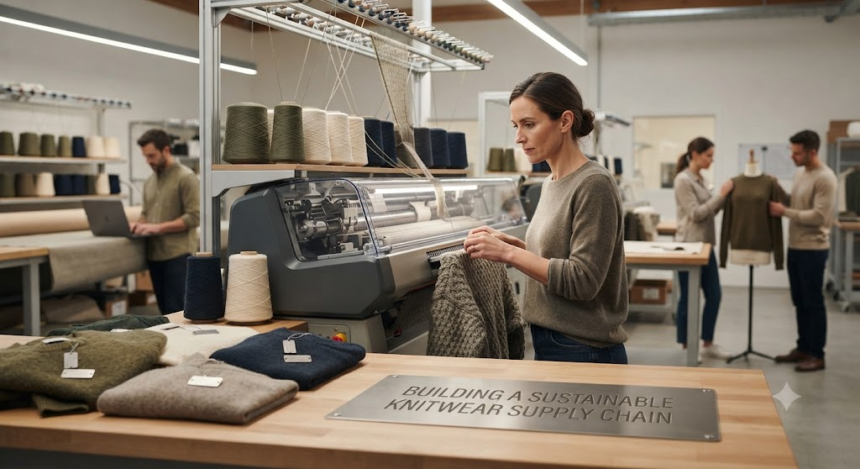
Building a truly sustainable knitwear supply chain requires fashion houses to look far beyond final-stage packaging. It mandates a comprehensive examination of material selection, thoughtful product design, rigorous quality control, and responsible manufacturing partnerships.
By addressing these core pillars, independent designers and established labels alike can significantly reduce their ecological footprints while simultaneously delivering durable, high-value garments to the market.
The Four Pillars of Sustainable Knitwear Supply Chains
1. Material Selection at the Source
The environmental impact of any garment is locked in long before it reaches a sewing floor. Fiber extraction and yarn spinning account for a massive share of the apparel industry’s total carbon and water footprints. Sustainable knitwear development begins by prioritizing raw materials that minimize ecological strain. This includes sourcing certified organic natural fibers, recycled synthetic alternatives, or innovative bio-based yarns that require fewer chemical inputs and less irrigation.
Furthermore, material selection directly influences how a fabric behaves during processing. Selecting cleaner, premium yarns reduces fiber breakage, lowers lint waste during knitting, and ensures that the resulting textile can withstand repeated washing without prematurely degrading.
2. Intentional Product Design
Sustainable design is rooted in longevity. All too often, garments are engineered with planned obsolescence in mind constructed from low-grade blends that pill, warp, or lose shape after a handful of cycles. Designing with sustainability in mind means focusing on timeless aesthetics, structural integrity, and ergonomic comfort.
For everyday staples like T-shirts, fleece hoodies, and polo shirts, design choices dictate resource use. Pattern pieces should be mapped efficiently to minimize fabric cutting waste, while hardware elements like drawstrings, zippers, and buttons should be selected for durability and ease of recycling at the end of the garment’s lifecycle.
3. Rigorous Quality Control
Quality control is frequently misunderstood as a purely defensive measure used to catch defects before shipping. In a sustainable paradigm, however, quality control is a primary offensive strategy against waste.
When a manufacturing facility maintains stringent quality checkpoints across yarn tensioning, dyeing colorfastness, and dimensional stability, it prevents entire batches from failing inspection or being discarded. Producing a garment right the first time conserves the water, energy, and raw materials that would otherwise be wasted on remanufacturing defective inventory.
4. Responsible Manufacturing Operations
The physical environment where apparel is assembled matters profoundly. Responsible manufacturing involves partnering with facilities that prioritize energy-efficient machinery, closed-loop water systems for dyeing and finishing, and comprehensive waste reduction protocols.
Social responsibility forms an equally vital component of this pillar. Ensuring fair wages, reasonable working hours, safe occupational health conditions, and strict compliance with international labor standards guarantees that human capital is valued just as much as natural capital.
Why Evaluating Your OEM and Knitwear Manufacturer Matters
For emerging and scaling fashion brands, choosing the right Original Equipment Manufacturer (OEM) or production partner is arguably the single most important strategic decision in the business cycle. A brand’s sustainability claims are only as credible as the factory floor execution.
If an apparel brand promises eco-friendly production but collaborates with a vendor plagued by opaque supply chains, excessive resource waste, or poor labor conditions, the brand exposes itself to reputational damage and greenwashing accusations.
Carefully evaluating a production partner ensures alignment across technical capabilities, ethical values, and long-term business goals. Established industry leaders such as operations like Ningbo Romie demonstrate how decades of specialized manufacturing experience can be leveraged to streamline complex garment development while maintaining structured oversight across production lines.
Evaluating an OEM involves looking past initial pricing quotes to analyze their technical competence, machinery modernization, and commitment to transparent, ethical manufacturing practices.
Developing Staples: Comfort, Quality, and Customization
Knit garments form the backbone of modern wardrobes. Consumers rely on items like T-shirts, polos, hoodies, and athletic wear for daily comfort, versatility, and expression. Developing these core categories for long-term wear requires balancing softness, structural performance, and precise custom detailing.
- T-Shirts and Polos: Whether crafting a classic cotton jersey tee or a technical pique polo shirt, fabric weight and yarn twist are critical. High-grade combed or ring-spun yarns yield a smoother hand-feel and superior pill resistance. For custom branding, techniques like eco-friendly water-based screen printing, low-impact digital printing, or clean tonal embroidery elevate the garment without compromising its recyclability.
- Hoodies and Fleece: Fleece garments require a delicate balance of thermal warmth, breathability, and bulk management. Utilizing tightly knit face yarns paired with brushed interior loops ensures the hoodie retains its plush feel and structure over years of use, rather than flattening out after three washes.
- Casual and Performance Apparel: Modern consumers expect seamless transitions between lounging, commuting, and light athletic activity. Incorporating technical knits that offer natural stretch, moisture management, and durability without relying on heavy chemical treatments allows brands to build versatile pieces that consumers keep in rotation longer.
Essential Questions Brands Must Ask Potential Partners
Before entering into a long-term production agreement, apparel brands must conduct thorough due diligence. Asking the right probing questions during the initial vetting phase prevents costly miscommunication, production delays, and quality discrepancies down the line.
Brands should focus their inquiries across six core operational areas:
- Sampling Protocols: What is your typical turnaround time for first protos and pre-production samples? How do you handle design adjustments and digital tech pack interpretations?
- Production Capacity and Scalability: What are your minimum order quantities (MOQs) per style and colorway? How do you manage peak production surges without compromising quality or delivery schedules?
- Quality Assurance Measures: At what stages of the manufacturing process are formal quality inspections conducted? What is your protocol for handling fabric shrinkage, color matching, and dimensional tolerance?
- Communication and Transparency: Who will be the dedicated point of contact during production? How frequently are progress updates and photo/video reports provided to the client?
- Customization Capabilities: To what extent can you accommodate bespoke fabric knitting, custom dyeing formulas, specialized hardware, and unique private-label packaging requirements?
- Delivery and Logistics: What is your average on-time delivery rate? How do you manage export documentation, freight forwarding coordination, and reliable transit timelines?
Conclusion
Building a sustainable knitwear supply chain is an ongoing journey of refinement, collaboration, and uncompromising standards. By focusing on intentional material choices, durable design principles, and rigorous manufacturing evaluations, apparel brands can create garments that satisfy modern consumer demands for style, comfort, and environmental responsibility. Choosing the right production partner bridges the gap between creative vision and real-world execution, ensuring that fashion brands can scale responsibly while protecting both people and the planet.