
Fashion show production is the process of planning, organizing, and managing everything needed to present a fashion collection on the runway. It brings together designers, models, stylists, lighting teams, and event professionals to create a memorable experience. Every successful fashion show requires creativity, teamwork, and careful preparation.
Whether you are organizing a small fashion presentation or a large runway event, understanding fashion show production can make the process easier. From selecting a venue to coordinating backstage activities, each detail contributes to the final presentation. This guide explains the essential steps, practical tips, and common challenges involved in producing a professional fashion show.
What Is Fashion Show Production?
Fashion show production involves coordinating the creative, technical, and operational elements of a runway event. It includes everything from developing the show concept to managing models and presenting the final collection. Producers work closely with designers and event teams to ensure the presentation runs smoothly. Their goal is to transform a fashion collection into an engaging visual experience.
A professional fashion show combines clothing, music, lighting, movement, and storytelling. Each element helps communicate the designer’s creative vision and brand identity. The production team ensures these elements work together instead of competing for attention. This coordination makes the runway presentation more organized, visually appealing, and memorable for the audience.
Fashion show production can range from small independent events to major international fashion weeks. Some shows feature traditional runways, while others use creative spaces and interactive presentations. Regardless of the event size, careful planning is necessary. Understanding the production process helps beginners make informed decisions before organizing their first show.
Why Fashion Show Production Matters
Fashion shows provide designers with opportunities to introduce collections and communicate their creative ideas. A well-produced event allows guests to appreciate the clothing, craftsmanship, and overall design direction. It also creates opportunities for media coverage, professional connections, and brand recognition. Strong production helps make the presentation feel consistent and purposeful.
The production quality can influence how audiences perceive a fashion brand. Clear lighting helps viewers notice fabrics, colors, and garment details. Suitable music and thoughtful runway pacing create a comfortable viewing experience. When these elements work together, the collection becomes the main attraction rather than getting lost in unnecessary distractions.
Fashion show production also supports the business goals behind the event. Designers may want to attract buyers, connect with retailers, or introduce a new brand identity. Others may organize shows to celebrate creativity or build community relationships. Defining these goals early helps producers make practical decisions about the event format and available resources.
Start With a Clear Fashion Show Concept
Every successful fashion show begins with a clear concept that guides the creative direction. The concept may reflect the collection’s inspiration, seasonal theme, cultural influences, or brand personality. It helps determine the atmosphere, runway design, music, and styling choices. A focused concept makes the production easier to organize and more visually consistent.
For example, a designer presenting a minimalist collection might choose neutral lighting and a simple runway layout. A collection inspired by nature may use organic textures and soft visual elements. These choices should support the clothing rather than distract from it. The goal is to create an environment that strengthens the designer’s overall message.
Before making production decisions, discuss the creative vision with the designer and key team members. Develop a mood board featuring suitable colors, materials, lighting references, and presentation ideas. This visual guide helps everyone understand the intended result. Clear communication at this stage can prevent expensive changes and unnecessary confusion later.
Create a Realistic Fashion Show Budget
Budget planning is one of the most important parts of fashion event production. Costs can include venue rental, lighting equipment, sound systems, model fees, staffing, transportation, and marketing materials. Smaller expenses, such as garment racks and backstage supplies, can also add up. Creating a detailed budget helps producers understand what the event can realistically support.
Start by identifying essential expenses before considering decorative or optional additions. A safe venue, reliable equipment, and qualified production staff should receive priority. Producers should also reserve part of the budget for unexpected costs. This financial flexibility can help address last-minute technical problems or additional event requirements without disrupting the entire production.
Compare supplier quotations and review what each service includes before signing agreements. Some venues provide basic equipment, while others require separate rentals and technical support. Understanding these differences helps prevent hidden expenses. Regular budget reviews throughout the planning process make it easier to control spending and maintain financial accountability.
Choose the Right Fashion Show Venue
The venue influences the overall atmosphere and practical requirements of a fashion show. It should provide enough space for the runway, audience seating, backstage preparation, and equipment. Accessibility, safety, and transportation options are also important considerations. Selecting a suitable location early gives the production team enough time to plan the event layout.
Traditional fashion show venues include hotels, exhibition halls, galleries, and dedicated event spaces. However, designers sometimes choose warehouses, outdoor locations, or historic buildings for creative presentations. Each setting offers different advantages and challenges. Producers should evaluate whether the space supports the collection’s concept while meeting practical production and safety requirements.
Visit potential venues before making a final decision whenever possible. Check electrical capacity, lighting options, entry points, changing areas, and emergency exits. Consider how guests, models, and production staff will move through the space. A venue that looks attractive in photographs may still require significant adjustments to accommodate a professional runway presentation.
Plan the Runway Layout and Stage Design
Runway design determines how models move and how the audience views the collection. Common layouts include straight runways, T-shaped stages, and presentations with seating around a central area. The best choice depends on the venue, audience size, and creative concept. A practical layout should allow models to walk comfortably while giving guests clear views.
Stage design can include flooring, background structures, screens, and decorative elements. These features should complement the garments rather than overpower them. Neutral backgrounds often work well because they keep attention on clothing details. More elaborate designs may suit theatrical collections, provided the production remains safe and visually balanced.
Runway surfaces must be stable, secure, and suitable for the footwear models will wear. Producers should avoid loose materials, unexpected obstacles, and distracting lighting near walking areas. Sufficient backstage access also helps models enter and exit smoothly. Careful runway planning improves movement, audience visibility, and the overall professionalism of the presentation.
Understand Fashion Show Lighting and Sound
Lighting is essential because it affects how garments appear during a runway presentation. Poor lighting can hide details, alter perceived colors, and reduce photography quality. Professional lighting designers consider brightness, positioning, and consistency across the runway. The goal is to make clothing visible while creating an atmosphere that supports the collection.
Sound production also plays an important role in the fashion show experience. Music helps establish the mood, influence runway pacing, and connect different sections of the collection. Producers should select tracks that suit the presentation’s creative direction. Sound levels must remain comfortable for guests while allowing backstage teams to communicate when necessary.
Technical rehearsals help lighting and sound operators understand the exact show sequence. Teams can test transitions, adjust equipment, and identify timing problems before guests arrive. Producers should also prepare practical backup arrangements for important technical systems. Reliable technical coordination reduces interruptions and helps maintain a smooth runway presentation.
Organize Model Casting and Selection
Model casting involves selecting individuals who can present the collection confidently and professionally. Designers may consider walking ability, experience, availability, and how well each model suits the intended presentation. Casting should reflect the collection’s creative requirements without relying on unnecessary appearance restrictions. Clear selection criteria help create a fair and organized process.
During casting, producers may review portfolios and observe runway walks. They should also discuss scheduling, compensation, fittings, and expectations with potential participants. Written agreements help clarify responsibilities and avoid misunderstandings. When working with younger models, appropriate guardian involvement and applicable legal protections are especially important.
A successful casting process considers the practical needs of the entire event. Producers should confirm each model’s availability for fittings, rehearsals, and show day. They should also maintain accurate contact details and garment assignments. Organized records make it easier to coordinate changes and keep the runway schedule running smoothly.
Coordinate Fashion Styling and Accessories
Fashion styling helps present garments in a way that supports the designer’s creative vision. Stylists work with clothing, shoes, accessories, and overall presentation details to create coordinated runway looks. Their decisions influence how individual pieces appear together. Effective styling highlights the collection while maintaining consistency across the entire show.
For example, a formalwear collection may feature carefully selected jewelry and elegant footwear. A streetwear presentation might use practical accessories and layered outfits. However, each styling decision should reflect the collection’s intended audience and message. Too many competing accessories can distract from the garments and weaken the overall presentation.
Styling teams should prepare detailed look sheets for every model before the event. These documents can include outfit photographs, accessories, footwear, and garment instructions. Clear records reduce confusion during fast backstage changes. They also help dressers and stylists maintain consistency throughout the rehearsal and final runway presentation.
Plan Hair and Makeup for the Runway
Hair and makeup contribute to the visual identity of a fashion show. Beauty teams collaborate with designers and stylists to develop looks that complement the clothing. Some collections require simple, natural presentation, while others feature more artistic styling. The chosen approach should support the creative concept without taking attention away from the garments.
Preparation begins with discussing references, testing products, and estimating the time needed for each model. Makeup artists and hairstylists should consider different skin and hair needs when planning their work. Suitable products, clean tools, and respectful communication help create a professional environment. Trial sessions can identify practical challenges before show day.
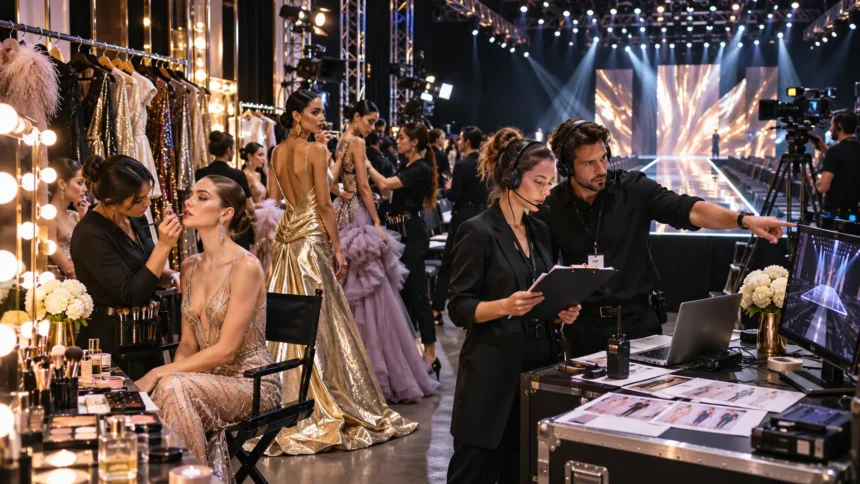
Backstage beauty stations should have adequate lighting, mirrors, seating, and organized supplies. Producers should build enough time into the schedule for preparation and adjustments. A designated beauty team coordinator can help manage assignments and prevent unnecessary delays. Careful planning supports consistent looks and a calmer backstage experience.
Manage Backstage Fashion Show Operations
Backstage coordination is one of the busiest parts of fashion show production. Models, dressers, stylists, makeup artists, and stage managers often work within limited spaces and tight schedules. Without clear organization, garment changes and runway entrances can become confusing. Effective backstage management helps every participant understand their responsibilities and timing.
Each model should have an assigned area or clearly organized garment station. Clothing can be arranged according to the running order, with accessories and footwear placed nearby. Look sheets make it easier for dressers to confirm every outfit. These simple systems reduce mistakes and support faster transitions between runway appearances.
Backstage managers should maintain clear communication with the runway director and technical crew. They need to know when models are ready, when entrances begin, and when adjustments are necessary. Keeping walkways clear also supports safety and efficient movement. A well-managed backstage environment allows the creative team to focus on presenting the collection.
Develop a Fashion Show Running Order
The running order determines the sequence in which models and outfits appear on the runway. It helps create a natural flow between different looks and collection sections. Designers may arrange garments according to colors, themes, or design progression. A thoughtful sequence allows audiences to understand the collection without unnecessary interruptions.
For example, a show may begin with simple everyday pieces before introducing more detailed designs. The final looks might highlight the collection’s strongest creative statement. Producers must consider outfit changes and model availability when building this sequence. A visually impressive order must also remain practical for the backstage team.
The final running order should include model names, outfit assignments, entrance cues, and relevant technical instructions. All departments need access to the latest approved version. Changes should be communicated clearly to prevent confusion during rehearsals. An accurate running order is essential for coordinating the fashion show’s movement, music, lighting, and timing.
Why Fashion Show Rehearsals Are Essential
Rehearsals allow the production team to test the show before the audience arrives. Models practice runway entrances, walking routes, turns, and exits. Technical teams confirm lighting transitions and sound cues while backstage staff review garment changes. This preparation helps identify problems that may not be obvious during the planning stage.
During rehearsal, producers should observe runway pacing and the spacing between models. They can adjust timing to prevent crowded entrances or unnecessary gaps. Models should also become familiar with the runway surface and backstage routes. A comfortable rehearsal environment encourages clear communication and helps participants perform their responsibilities confidently.
A complete technical rehearsal is especially valuable for larger productions with complex requirements. The team should practice the opening sequence, transitions, and final presentation. Any problems should be documented and assigned to the appropriate staff members. Addressing issues before showtime improves coordination and reduces avoidable interruptions during the event.
Create an Effective Fashion Show Marketing Plan
Fashion show marketing helps attract the right audience and build interest before the event. Promotional activities may include social media announcements, invitations, press outreach, and designer interviews. The marketing approach should reflect the event’s purpose and intended guests. A clear strategy makes it easier to communicate why the collection deserves attention.
For example, an emerging designer may promote a collection through Instagram, fashion communities, and local media. A trade-focused presentation might prioritize retail buyers, editors, and industry professionals. Event invitations should explain important details such as location, date, and attendance requirements. Consistent messaging helps create a recognizable identity across promotional channels.
Marketing should continue throughout the preparation process rather than beginning immediately before the show. Behind-the-scenes content can introduce the creative team and build anticipation. However, producers should obtain permission before sharing sensitive designs or participant images. Thoughtful promotion supports audience engagement while respecting professional agreements and creative confidentiality.
Manage Guests, Seating, and Event Experience
Guest management influences how smoothly attendees experience a fashion show. Producers must consider invitations, registration, seating arrangements, accessibility, and arrival procedures. Clear communication helps guests understand when and where the event takes place. A welcoming, organized experience contributes to the overall impression of the fashion brand.
Seating arrangements depend on the venue layout and the event’s goals. Fashion editors, buyers, invited partners, and other guests may require different seating considerations. However, every attendee should have a safe and comfortable experience. Producers should also maintain accessible routes and follow venue capacity requirements.
An efficient check-in process reduces congestion before the runway presentation begins. Staff members should know how to handle late arrivals, seating questions, and unexpected changes. Clear signs and trained guest coordinators improve event navigation. Managing these details allows attendees to focus on the fashion collection rather than logistical problems.
Common Fashion Show Production Mistakes
One common mistake is planning an ambitious event without considering available resources. Complicated stage designs, excessive decorations, and unrealistic schedules can create unnecessary pressure. Producers may also underestimate staffing needs or forget important backstage supplies. Keeping the production concept realistic helps avoid expensive problems and operational confusion.
Another frequent issue is poor communication between creative and technical departments. A lighting team may receive outdated instructions, or models may not know their final entrance order. These misunderstandings can disrupt the show. Regular coordination meetings, updated documents, and clearly assigned responsibilities help ensure everyone works from the same plan.
Skipping rehearsals and ignoring contingency planning can also create avoidable problems. Equipment may fail, deliveries may arrive late, or participants may become unavailable. Producers should identify likely risks and prepare reasonable alternatives. Flexibility, organization, and calm decision-making are valuable qualities when managing unexpected production challenges.
How to Become a Fashion Show Producer
Becoming a fashion show producer involves developing creative judgment, organization, communication, and event management skills. Producers coordinate people, equipment, schedules, and budgets while supporting the designer’s vision. They must understand both the artistic and practical sides of fashion events. Experience in event production, fashion styling, or backstage coordination can provide a useful foundation.
Beginners can gain experience by assisting with local fashion shows, student presentations, and small designer events. These opportunities provide practical exposure to casting, rehearsals, venue preparation, and backstage operations. Observing experienced professionals also helps newcomers understand production responsibilities. Building dependable relationships with creative and technical teams can support future opportunities.
A professional portfolio can demonstrate your involvement in fashion show planning and execution. Include photographs, event descriptions, responsibilities, and measurable achievements where available. Develop skills in scheduling, budgeting, problem-solving, and production communication. With continued practice, producers can take on larger events and more complex creative projects.
Conclusion
Fashion show production combines creativity, technical planning, and practical event management. From developing the initial concept to coordinating the final runway appearance, every stage requires attention. Understanding these responsibilities helps beginners approach fashion events with greater confidence. A successful presentation depends on thoughtful preparation and effective teamwork.
The most important elements include budgeting, venue selection, casting, styling, lighting, rehearsals, and backstage coordination. Each department contributes to the overall experience and should understand its responsibilities. Clear schedules and reliable communication help reduce unnecessary problems. Even smaller productions can appear professional when essential details are carefully organized.
Learning fashion show production takes experience, patience, and a willingness to improve. Starting with manageable events allows aspiring producers to develop practical skills before handling larger presentations. By combining creative direction with realistic planning, you can organize fashion shows that highlight collections and create meaningful experiences for audiences.
Frequently Asked Questions
What does fashion show production involve?
Fashion show production involves planning and coordinating runway events, including budgeting, venue selection, model casting, styling, lighting, sound, rehearsals, and backstage management. The goal is to present a fashion collection professionally and creatively.
How much does it cost to produce a fashion show?
Fashion show production costs vary depending on venue size, location, staffing, equipment, and creative requirements. Small presentations may require modest budgets, while large professional runway events can involve substantial expenses.
What skills do you need for fashion show production?
Important skills include event planning, communication, budgeting, creative coordination, problem-solving, and time management. Knowledge of runway operations, styling, lighting, and backstage organization also helps producers manage successful fashion events.
How long does it take to plan a fashion show?
Planning time depends on the event’s size and complexity. Small presentations may take several weeks, while larger runway productions often require months of preparation, supplier coordination, rehearsals, and promotional planning.
Can beginners organize a fashion show?
Yes, beginners can organize small fashion shows by starting with a clear concept, manageable budget, and reliable team. Careful scheduling, simple runway designs, and practical rehearsals help make the first production more successful.