
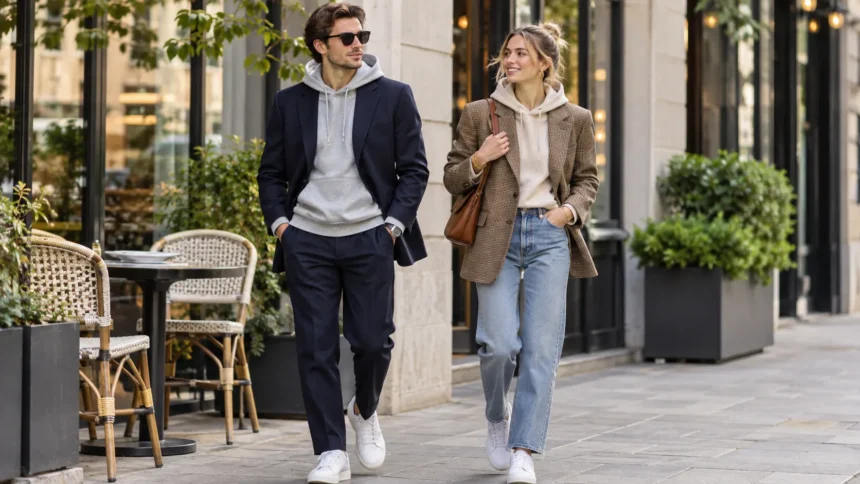
Hoodie and blazer outfits offer a comfortable way to combine casual clothing with a polished appearance. This modern styling combination brings together the relaxed feel of a hoodie and the structured design of a blazer. It works well for casual outings, creative workplaces, weekend activities, and everyday streetwear looks.
The key to making this combination work is choosing pieces that complement each other. Colors, fabrics, layering, and proportions all influence the final appearance. Whether you prefer minimalist fashion or relaxed street style, this guide explains how to create hoodie and blazer outfits with simple styling tips and practical examples.
What Are Hoodie and Blazer Outfits?
Hoodie and blazer outfits combine a casual hooded sweatshirt with a tailored or relaxed blazer. The hoodie provides comfort and a sporty appearance, while the blazer adds structure and a more refined finish. Together, these pieces create a smart-casual look that can feel relaxed without appearing completely informal or overly dressed.
This outfit combination has become a familiar part of contemporary streetwear and everyday fashion. It allows people to mix clothing traditionally associated with different dress codes. Rather than keeping formal and casual clothing separate, this styling approach creates interesting contrasts through different materials, shapes, and clothing details.
The combination is also flexible because it works with jeans, trousers, sneakers, and various accessories. A neutral hoodie under a classic blazer creates a simple everyday outfit. Meanwhile, an oversized blazer with a colorful hoodie can produce a more expressive streetwear look without requiring an entirely new wardrobe.
Why Hoodies and Blazers Work Well Together
The main appeal of hoodie and blazer outfits comes from the contrast between casual comfort and tailored structure. A blazer introduces clean lines, while the hoodie adds softness and a relaxed feeling. These differences create visual interest and help make an outfit look thoughtfully coordinated rather than limited to one clothing style.
Another advantage is versatility across different casual and semi-casual settings. The combination works for coffee outings, informal meetings, shopping trips, and some workplaces with flexible dress codes. Changing the trousers, footwear, and accessories can make the same hoodie and blazer suitable for several different daily activities.
Layering these pieces can also provide practical comfort during cooler weather. A hoodie adds warmth underneath the blazer, while the outer layer helps create a complete outfit. Choosing breathable fabrics and allowing enough room between layers makes the combination easier to wear throughout the day without feeling overly restrictive.
How to Choose the Right Hoodie for a Blazer
Selecting the right hoodie is an important first step when creating a balanced outfit. Lightweight or medium-weight hoodies usually layer more comfortably beneath blazers than very thick styles. A smooth fabric and simple design can reduce unnecessary bulk while allowing the blazer to maintain its natural shape and movement.
The fit of the hoodie should complement the blazer rather than compete with it. A regular-fit hoodie often works with structured jackets, while a relaxed hoodie may pair better with an oversized blazer. Check how the sleeves, shoulders, and chest feel when both pieces are worn together.
Color and design also influence how easily a hoodie blends with other wardrobe essentials. Solid colors such as black, gray, cream, and navy offer versatile styling options. Hoodies with subtle graphics can add personality, although large prints and heavy decorative details may create a busier appearance under a blazer.
Choosing the Best Blazer for Hoodie Outfits
A blazer should provide enough room to accommodate the hoodie without pulling across the shoulders or chest. Relaxed and slightly oversized styles often work particularly well because they offer additional layering space. However, a regular-fit blazer can also look good when paired with a thinner hoodie.
Fabric selection makes a noticeable difference in the final outfit. Wool blends, cotton twill, and other comfortable materials can provide structure without feeling excessively stiff. A softer blazer may suit everyday streetwear, while a more tailored design creates a sharper contrast with the hoodie underneath.
The blazer’s length and shoulder shape should also complement the remaining clothing. Longer blazers can look balanced with straight-leg trousers or jeans, while shorter styles may create a compact silhouette. Trying different combinations helps identify which proportions feel comfortable and match your preferred personal style.
Classic Black Hoodie and Blazer Outfits
A black hoodie is one of the easiest pieces to style with different blazers. Its neutral color pairs naturally with gray, charcoal, beige, and black outerwear. A black hoodie beneath a gray blazer creates a clean appearance that works well with dark jeans and simple sneakers.
For a coordinated monochrome outfit, combine a black hoodie with a black blazer and matching trousers. Small differences in fabric texture can add visual interest without introducing additional colors. White sneakers, a simple watch, or a neutral bag can provide contrast while maintaining the outfit’s understated appearance.
Black hoodies also work with patterned blazers, including subtle checks and textured designs. Keeping the remaining clothing simple allows the blazer to become the main visual feature. This approach is especially useful for beginners who want to experiment with different outerwear styles without creating complicated color combinations.
Gray Hoodie and Blazer Outfit Ideas
A gray hoodie is another versatile wardrobe essential that pairs easily with structured outerwear. Light gray looks particularly effective beneath navy, black, and charcoal blazers. For a simple casual outfit, wear a gray hoodie with a navy blazer, dark blue jeans, and comfortable white sneakers.
Different shades of gray can also create an interesting tonal outfit. A light gray hoodie under a darker gray blazer offers contrast without relying on bright colors. Adding black trousers or dark denim helps complete the look while keeping the overall styling straightforward and easy to repeat.
Gray hoodies can also soften the appearance of more traditional blazers. For example, pairing a gray sweatshirt hoodie with a brown checked blazer creates a relaxed interpretation of classic tailoring. Neutral trousers and simple footwear help connect the different styles, making the outfit suitable for informal social occasions.
Oversized Hoodie and Blazer Outfit Ideas
Oversized hoodie and blazer outfits are popular within relaxed streetwear styling because they emphasize comfortable shapes and easy layering. An oversized blazer can provide enough space for a roomy hoodie underneath. The result is a casual combination that feels contemporary while maintaining some of the structure associated with tailored clothing.
When combining oversized pieces, pay attention to how the layers move together. A hoodie that bunches heavily around the shoulders or arms may feel uncomfortable beneath a blazer. Choosing softer materials and checking the fit while sitting or walking can help ensure the outfit remains practical throughout daily activities.
Straight-leg jeans, relaxed trousers, and casual sneakers work naturally with this styling approach. You can also experiment with wide-leg pants for a more expressive streetwear look. Keeping colors coordinated makes the outfit easier to style, especially when several pieces have relaxed or oversized shapes.
Hoodie and Blazer Outfits With Jeans
Jeans are a practical choice for hoodie and blazer outfits because they connect casual clothing with structured outerwear. Straight-leg denim offers a versatile starting point that works with many blazer styles. A navy blazer, cream hoodie, blue jeans, and white sneakers create an approachable outfit for everyday activities.
Dark jeans can make this combination feel slightly more refined without sacrificing comfort. Black or deep indigo denim pairs well with gray, navy, and camel blazers. A simple hoodie underneath maintains the casual character of the outfit, while clean footwear helps create a coordinated appearance suitable for informal gatherings.
Light-wash jeans provide a more relaxed alternative, especially during spring and mild weather. They work well with neutral hoodies and lighter blazer colors such as beige or soft gray. Choosing denim without excessive decorative details can help the different clothing pieces feel connected rather than competing for attention.
Styling Hoodies and Blazers With Trousers
Trousers can give hoodie and blazer outfits a smart-casual appearance while remaining comfortable for daily wear. Tailored trousers introduce clean lines that contrast with the relaxed hoodie. A charcoal blazer, black hoodie, and matching straight-leg trousers create a simple outfit that works for many casual professional environments.
Chinos offer another practical option because they sit between formal tailoring and casual denim. Beige, olive, navy, and black chinos pair easily with neutral hoodie colors. Wearing them with a relaxed blazer and simple sneakers creates an adaptable outfit for coffee meetings, casual office days, or weekend plans.
Wide-leg trousers can also complement hoodies and blazers when the overall proportions feel balanced. Their relaxed shape works particularly well with unstructured or oversized blazers. Consider the trouser length and footwear together so the hems sit comfortably and allow you to move without stepping on excess fabric.
Best Shoes for Hoodie and Blazer Outfits
Sneakers are a popular footwear choice because they match the casual character of a hoodie. Simple white sneakers work with most neutral blazers, jeans, and trousers. Black sneakers create a more understated look, while retro-inspired athletic shoes can add personality to streetwear combinations without changing the entire outfit.
Loafers offer an alternative when you want a slightly more polished finish. They work particularly well with straight-leg trousers, dark jeans, and a simple hoodie. The contrast between casual layering and classic footwear can create an interesting outfit suitable for relaxed social occasions or workplaces with informal clothing expectations.
Boots are another useful option during colder months. Chelsea boots, casual leather boots, and simple ankle boots can complement darker blazers and neutral hoodies. Choose footwear that matches the weather, your activities, and the overall outfit rather than focusing only on whether individual pieces are traditionally considered formal or casual.
Hoodie and Blazer Outfits for Different Seasons
Spring is a convenient season for experimenting with hoodie and blazer layering. Lightweight cotton hoodies pair comfortably with unstructured blazers during changing temperatures. Soft colors such as cream, light gray, sage, and beige can create a fresh appearance when combined with jeans, chinos, or casual sneakers.
During autumn, slightly heavier hoodies and textured blazers can provide additional warmth. Wool-blend jackets, darker colors, and comfortable trousers work naturally together. Earth tones such as brown, olive, charcoal, and camel can create coordinated seasonal outfits while allowing individual pieces to remain useful across different combinations.
Winter outfits may require extra protection depending on the local climate. A hoodie and blazer can work as middle layers beneath a roomy overcoat when temperatures become colder. In warmer weather, choose breathable materials and lighter layers, or reserve this combination for cooler evenings and air-conditioned indoor environments.
Hoodie and Blazer Outfits for Work
Hoodie and blazer outfits can be suitable for workplaces that encourage casual or creative clothing styles. A clean hoodie beneath a simple blazer provides a relaxed alternative to traditional business attire. However, workplace expectations differ, so checking the dress code remains important before choosing this combination for professional activities.
For a more polished office-friendly outfit, pair a plain neutral hoodie with a structured blazer and tailored trousers. Dark jeans may also work when the workplace allows casual denim. Minimal accessories and clean footwear help keep the outfit coordinated without removing the comfortable character that makes this combination appealing.
Some professional settings require traditional business clothing and may not consider hoodies appropriate. Client presentations, formal interviews, and ceremonial events often have different expectations from everyday office work. Understanding the occasion helps you decide whether hoodie and blazer layering is appropriate or whether another outfit would be more suitable.
Streetwear-Inspired Hoodie and Blazer Looks
Streetwear-inspired hoodie and blazer outfits encourage experimentation with relaxed fits, contrasting textures, and personal accessories. A loose blazer over a graphic hoodie can create a distinctive casual look. Straight-leg cargo pants or relaxed jeans provide additional styling options while keeping the outfit connected to everyday streetwear fashion.
Accessories can help personalize the combination without requiring major wardrobe changes. Baseball caps, crossbody bags, simple jewelry, and casual backpacks may work depending on the occasion. Choosing a few accessories that complement the clothing colors often creates a more coordinated look than adding many unrelated details.
Color experimentation is another way to develop a personal streetwear style. A navy blazer with a burgundy hoodie creates a richer combination, while beige outerwear can work with muted green or blue. Starting with one noticeable color and keeping the remaining pieces neutral makes unfamiliar combinations easier to manage.
Common Mistakes When Wearing Hoodies With Blazers
One common mistake is choosing layers that do not fit comfortably together. A thick hoodie beneath a restrictive blazer can limit movement and cause the outer fabric to bunch. Selecting compatible sizes and trying the complete outfit before leaving home helps prevent discomfort while maintaining the intended appearance.
Another mistake is ignoring how colors and patterns interact. A bright graphic hoodie, heavily patterned blazer, and colorful trousers may create more visual contrast than intended. This does not make the combination incorrect, but beginners may find it easier to start with neutral foundations and introduce stronger details gradually.
Footwear and accessories can also affect how coordinated an outfit appears. Formal dress shoes may feel disconnected from a sporty hoodie in some combinations, while highly athletic footwear can change the character of tailored trousers. Experimenting with different options helps identify combinations that suit your activities, comfort preferences, and overall style.
How to Build Hoodie and Blazer Outfits on a Budget
Building hoodie and blazer outfits does not require purchasing an entirely new wardrobe. Begin by reviewing hoodies, jackets, trousers, and sneakers you already own. Neutral clothing pieces are especially useful because they can be combined in different ways without requiring additional colors or matching accessories.
When shopping, focus on versatility, comfort, and construction rather than buying several similar items. One well-fitting neutral blazer can work with multiple hoodies and different trousers. A black or gray hoodie may also be useful for other casual outfits, making it a practical addition beyond this specific styling combination.
Secondhand shops and clothing resale platforms can offer affordable options for experimenting with new styles. Check garment measurements, fabric condition, and return policies when available. Choosing pieces that fit your lifestyle and existing wardrobe often provides better long-term value than purchasing clothing solely because a particular combination is currently popular.
Conclusion
Hoodie and blazer outfits provide a practical way to combine everyday comfort with structured clothing. This versatile combination works with jeans, trousers, sneakers, and different accessories. By choosing complementary colors and comfortable layers, you can create simple outfits that reflect your personal style without making everyday dressing complicated.
The easiest approach is to begin with neutral hoodies and versatile blazers. Black, gray, navy, and beige offer many combinations for beginners to explore. Once you understand how different fabrics, proportions, and footwear work together, adding patterns or brighter colors becomes a natural way to personalize your outfits.
Ultimately, successful hoodie and blazer styling depends on comfort, coordination, and the occasion. There is no single correct way to wear this combination, and individual preferences should guide your choices. Experimenting with clothing you already own can help you discover reliable everyday looks that feel practical and enjoyable to wear.
Frequently Asked Questions (FAQs)
Can You Wear a Hoodie With a Blazer?
Yes, you can wear a hoodie with a blazer to create a comfortable smart-casual outfit. Choose pieces that layer comfortably, coordinate their colors, and complete the look with suitable jeans, trousers, or sneakers.
What Type of Hoodie Looks Best Under a Blazer?
Lightweight or medium-weight hoodies often work best because they reduce unnecessary bulk. Plain hoodies in neutral colors are especially versatile, although relaxed and graphic styles can also complement suitable blazers.
Can You Wear a Hoodie and Blazer to Work?
Yes, this combination can work in offices with casual or creative dress codes. A plain hoodie, simple blazer, and tailored trousers create a coordinated appearance, but formal workplaces may require different clothing.
What Pants Go Best With a Hoodie and Blazer?
Straight-leg jeans, chinos, tailored trousers, and relaxed pants all work with hoodie and blazer outfits. The best choice depends on the occasion, your preferred style, and the fit of the other clothing pieces.
Are Hoodie and Blazer Outfits Suitable for Winter?
Yes, hoodie and blazer outfits can work during winter when appropriate fabrics and additional layers provide enough warmth. In colder conditions, wearing a roomy overcoat over the combination offers extra protection.