

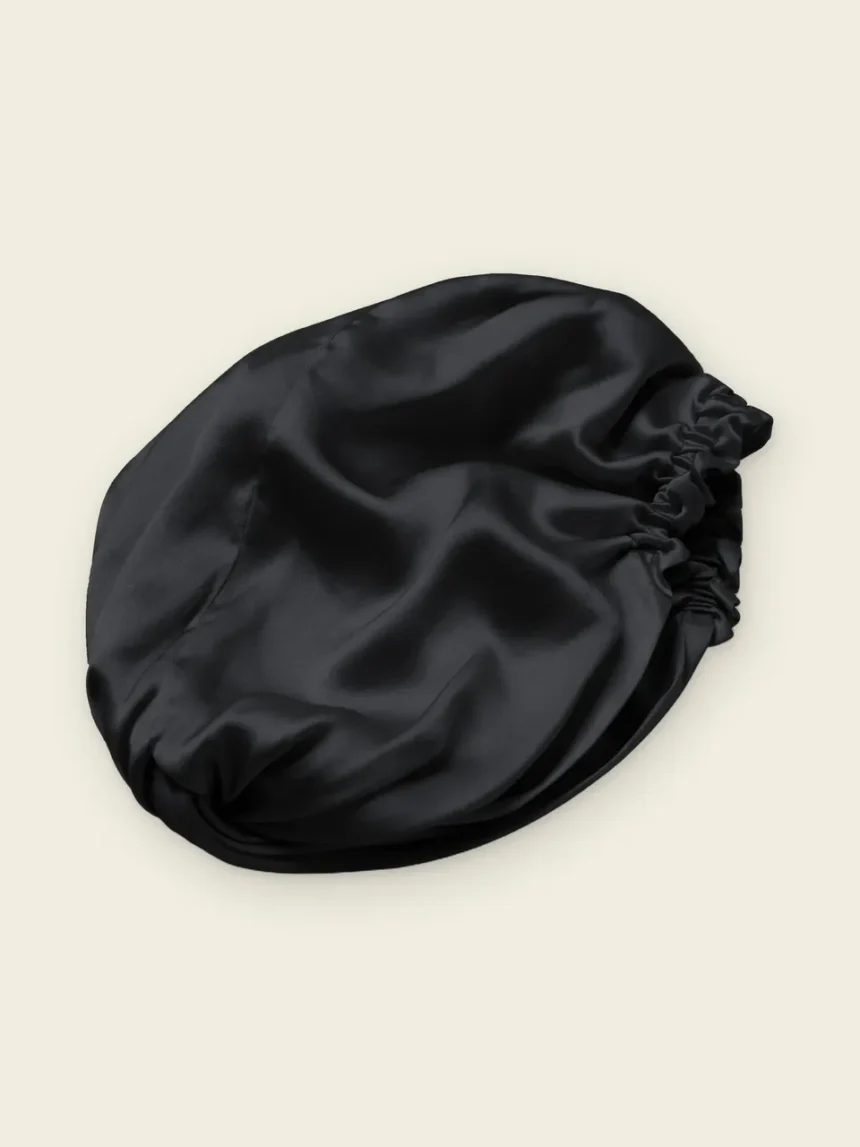
If you have spent any time looking into overnight hair care, you will have come across the same two words over and over again: silk and satin. Bonnets, scrunchies, pillowcases and headscarves all come in both, often side by side, and often with very different price tags. Plenty of articles use the two words as if they mean the same thing.
They do not. And once you understand the difference, choosing what to sleep in becomes a lot simpler.
Silk is a fibre. Satin is a weave.
This is the single most useful thing to know.
Silk is a natural protein fibre made by silkworms. Mulberry silk, the most common type in quality products, comes from silkworms fed on mulberry leaves, which produces a long, fine and even filament.
Satin is not a material at all. It is a way of weaving threads so that most of them float on the surface, which creates that smooth, glossy face. You can weave satin from silk, but you can also weave it from polyester, nylon or acetate. When a product is described simply as “satin”, it is almost always polyester.
So the real comparison is not silk versus satin. It is silk versus polyester, and that is where the differences start to show.
How they compare on your hair
Both are smooth. This is the main reason either is better than a cotton pillowcase for many people. Cotton has a more textured surface that hair can catch on as you turn over in the night, which is why some people wake up with frizz, tangles and flattened curls. A smooth surface lets hair glide instead.
They feel different against the skin. Silk tends to feel cool to the touch and breathes well, and it is a natural material that many people find more comfortable over a whole night. Polyester satin can feel slippery at first but warmer after a few hours, and some people find it makes their head sweat.
They handle moisture differently. Cotton is very absorbent and can draw moisture and product out of hair. Silk absorbs far less than cotton, so it is less likely to leave hair feeling dry. Polyester absorbs very little, which sounds like an advantage, but it means it also does not breathe as well when you get warm.
They age differently. Good silk softens with washing and lasts years if you look after it. Cheaper polyester satin can start to pill or lose its sheen relatively quickly, especially if it goes through a hot wash.
They cost differently. Silk is more expensive, there is no getting around that. Polyester satin is a perfectly reasonable place to start if you are on a budget and just want to see whether a bonnet suits your routine.
How to read a label
Labels in this category can be deliberately vague. Here is what to look for:
- “100% mulberry silk” is the clearest description you will get. If a product only says “silk satin”, “silky” or “satin”, check the full fibre content; it is often polyester.
- Momme weight is a measure of silk density, a little like thread count for cotton. Higher numbers generally mean a heavier, more opaque and more durable fabric. Most quality sleep accessories sit somewhere in the high teens to the low twenties.
- Price as a clue. Real mulberry silk is never as cheap as polyester. If a “pure silk” bonnet costs less than a sandwich, be sceptical.
Specialist silk brands often publish fuller guides to fibres and weaves, and they are worth reading before you buy, including for tips on checking what you already own.
Choosing a bonnet that actually stays on
Whatever material you choose, a bonnet only works if it is still on your head in the morning. A few things to consider:
- Elastic band or tie? Full elastic bands are quick but can leave a mark on the forehead if they are tight. Half-elastic backs and tie-back styles let you adjust the fit, which suits fine hair, sensitive skin and anyone who moves a lot in their sleep.
- Single or double layer. A double-layer bonnet has a little more structure and is often reversible. A single layer is lighter and cooler.
- Room for your hair. If you wear braids, twists, locs or very long hair, look for a deeper bonnet or a long style so that nothing is squashed.
- The details. A ruffled edge or a folded brim is not just decorative. It can help the bonnet sit neatly and look nice enough to answer the door in.
If you decide silk is worth it, look for a silk bonnet that is clearly labelled as 100% mulberry silk and has an adjustable fit that suits your hair type.
Looking after it
Silk and satin both last longer with a little care:
- Hand wash in cool water with a gentle detergent made for delicates.
- Do not wring. Press out water in a towel and dry flat or hang to dry away from direct heat.
- Wash it regularly. A bonnet picks up hair products and natural oils just as a pillowcase does.
So which should you choose?
If you are curious about sleeping in a bonnet but not sure you will stick with it, start with a polyester satin one. It costs very little and it will show you whether a smooth surface makes a difference to your hair.
If you already know you like it, and especially if your hair is curly, textured, fine or prone to breaking, silk is worth the upgrade. It breathes better, it feels more comfortable over a long night, and a well-made one will be with you for years.
Just make sure that when you pay for silk, silk is what you actually get.