
Dresses are among the most versatile clothing options because they offer countless ways to create comfortable, stylish, and practical outfits. From relaxed everyday styles to elegant evening designs, different types of dresses provide options for almost every occasion. Understanding their features makes it easier to choose clothing that reflects your personal preferences and fits naturally into your existing wardrobe.
Fashion trends may change throughout the year, but many classic dress styles remain popular because of their timeless designs. Shirt dresses, maxi dresses, wrap dresses, and A-line dresses can all be styled in different ways with simple accessories. Learning how these designs differ helps you experiment with outfits without making your wardrobe unnecessarily complicated.
Whether you enjoy casual fashion, minimalist clothing, or statement outfits, exploring different types of dresses can inspire fresh combinations. The right styling approach depends on your comfort, the occasion, the weather, and your personal taste. This guide explores popular dress styles, practical outfit ideas, and easy styling tips for creating looks that feel natural and enjoyable.
What Are the Different Types of Dresses?
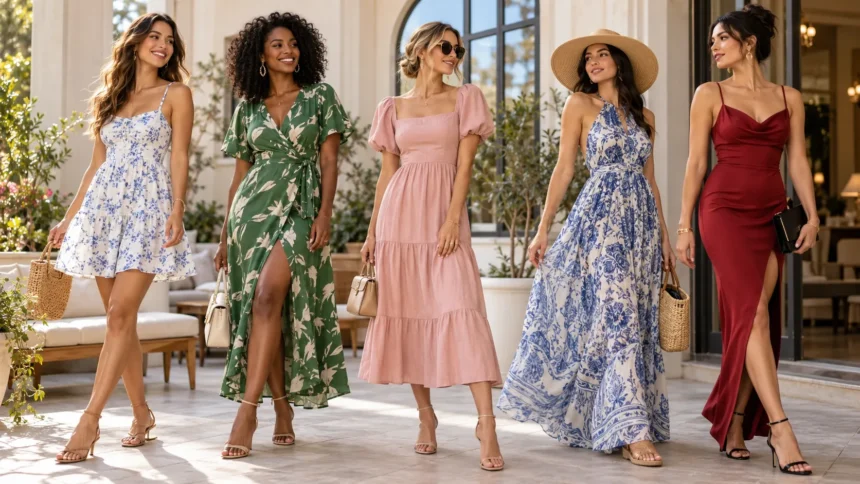
Different types of dresses are generally categorized according to their silhouette, length, neckline, fabric, and overall design. Some styles feature structured shapes, while others offer relaxed fits and flowing materials. Understanding these differences helps you recognize common dress designs and choose styles that suit your daily activities, personal preferences, and the occasions you attend.
Dress lengths also play an important role in distinguishing different styles. Mini dresses usually finish above the knee, midi dresses fall around the knee-to-calf area, and maxi dresses extend toward the ankles or floor. Each length offers different styling possibilities, allowing you to create casual, professional, or formal outfits depending on the fabric and accessories.
Popular dress designs include A-line dresses, wrap dresses, shirt dresses, slip dresses, bodycon dresses, and fit-and-flare styles. Other options, such as sweater dresses, sundresses, and evening gowns, are often associated with particular seasons or occasions. Exploring these categories can make shopping easier and help you build a wardrobe with practical variety.
A-Line Dresses: Classic and Versatile Style
An A-line dress features a silhouette that gradually widens from the upper section toward the hem, creating a shape resembling the letter A. This classic design works with different fabrics, lengths, and sleeve styles. A-line dresses are popular for everyday wear, workplace outfits, celebrations, and occasions that call for simple yet polished clothing.
For casual styling, pair an A-line dress with comfortable sneakers, flat sandals, or ankle boots. A denim jacket can add a relaxed layer, while a lightweight cardigan works well during cooler weather. Choosing cotton or linen designs creates an easy daytime outfit suitable for shopping, meeting friends, or enjoying a casual weekend.
For more formal occasions, an A-line dress can be styled with elegant shoes, a structured handbag, and understated jewelry. Solid colors create a minimalist appearance, while floral prints and textured fabrics add visual interest. The versatility of this design makes it a practical addition to wardrobes that need clothing for multiple settings.
Maxi Dresses: Comfortable and Effortless Outfits
Maxi dresses are long dresses that typically extend to the ankles or near the floor. They are available in flowing, fitted, tiered, and structured designs, offering plenty of styling flexibility. Lightweight maxi dresses are especially popular during warm weather, while knitted or long-sleeved versions provide practical options for cooler seasons.
A casual maxi dress looks great with flat sandals, canvas sneakers, or comfortable slip-on shoes. Add a woven bag and simple accessories for a relaxed daytime outfit. Floral, striped, and solid-colored designs can create different moods, making maxi dresses suitable for vacations, outdoor gatherings, and everyday activities.
For evening occasions, choose a maxi dress with elegant fabric, interesting sleeves, or subtle detailing. Pair it with dress shoes and accessories that complement the overall design. A lightweight blazer or tailored jacket can add structure without changing the comfortable character of the outfit, making this style adaptable to different events.
Midi Dresses: Stylish Choices for Everyday Wear
Midi dresses typically fall somewhere between the knee and ankle, making them a versatile choice for different environments. They come in various silhouettes, including straight, pleated, wrap, and fit-and-flare designs. Their adaptable length allows them to work with casual footwear, office-friendly layers, and more polished accessories depending on the occasion.
For an everyday outfit, combine a midi dress with white sneakers and a lightweight jacket. A crossbody bag and minimal jewelry complete the look without requiring complicated styling. During warmer months, breathable fabrics and open footwear create a comfortable combination for daytime activities and relaxed social gatherings.
Midi dresses can also work well for workplace settings when paired with appropriate layers and accessories. A structured blazer, loafers, and a simple handbag create a neat appearance. Neutral colors are easy to coordinate, while subtle patterns provide an opportunity to introduce personality into a professional wardrobe.
Mini Dresses: Fun and Modern Outfit Ideas
Mini dresses are shorter designs that generally finish above the knee and come in numerous silhouettes. Popular options include shift dresses, A-line mini dresses, shirt-style designs, and relaxed T-shirt dresses. Their variety makes them suitable for different personal styles, from sporty and casual outfits to more dressed-up looks.
For casual occasions, style a mini dress with sneakers, flat boots, or comfortable sandals. An oversized denim jacket or relaxed cardigan introduces an extra layer and creates an interesting contrast. Simple accessories help maintain a balanced outfit, especially when the dress features bright colors, decorative details, or bold prints.
During cooler seasons, mini dresses can be paired with tights, knee-high boots, and cozy outerwear. A sweater layered over a simple mini dress creates another styling option. Choosing pieces based on comfort and weather conditions makes the outfit practical while allowing you to experiment with different combinations.
Wrap Dresses: Easy Styling for Different Occasions
Wrap dresses feature a design in which one section crosses over another and is secured with a tie, fastening, or built-in closure. Some versions are fully adjustable, while others imitate the wrapped appearance. This design is available in mini, midi, and maxi lengths, making it suitable for different clothing preferences.
A printed wrap dress pairs naturally with simple sandals, ballet flats, or low-heeled shoes. For daytime outfits, choose breathable materials and accessories that complement the colors in the print. A small shoulder bag and delicate jewelry create a coordinated look without drawing attention away from the dress itself.
Solid-colored wrap dresses can also work well for office outfits, dinners, and special occasions. Add a blazer for a structured appearance or a cardigan for a softer everyday combination. When choosing a wrap dress, checking the fastening and fabric coverage helps ensure the design feels comfortable during movement.
Shirt Dresses: Casual and Smart Outfit Inspiration
Shirt dresses take inspiration from traditional button-down shirts and usually feature collars, front buttons, and relaxed or tailored silhouettes. They are available in cotton, denim, linen, and other fabrics. Their familiar construction makes them particularly useful for people who enjoy combining comfortable clothing with simple, organized styling.
A relaxed shirt dress looks effortless with canvas sneakers, loafers, or flat sandals. Roll up the sleeves for a casual appearance and add a crossbody bag for everyday convenience. Denim shirt dresses create a particularly easy weekend outfit, while striped cotton versions offer a fresh alternative for warmer weather.
For smarter occasions, choose a structured shirt dress and pair it with polished footwear and a simple handbag. A removable fabric belt can add detail when you want a different silhouette. Layering a sleeveless sweater or cardigan over the dress also provides additional outfit combinations during transitional seasons.
Bodycon Dresses: Simple and Contemporary Styling
Bodycon dresses are designed with a close-fitting silhouette and often use stretch fabrics that follow the garment’s shape. They come in different lengths, sleeve styles, and necklines. While commonly associated with evening outfits, simple bodycon designs can also be incorporated into casual wardrobes through thoughtful layering and comfortable accessories.
For an everyday look, pair a ribbed bodycon dress with sneakers and an oversized shirt or denim jacket. A relaxed outer layer creates contrast with the fitted design. Cotton-blend and knitted fabrics can provide comfortable options, while neutral colors make the dress easier to combine with clothing you already own.
For an evening outfit, a bodycon dress can be styled with elegant flats, boots, or dress shoes. Add a small handbag and accessories that suit your preferred level of detail. The most important consideration is choosing a fabric and fit that allow you to move comfortably and feel confident throughout the occasion.
Fit-and-Flare Dresses: Playful and Timeless Designs
Fit-and-flare dresses feature a more defined upper section and a skirt that widens toward the hem. This classic silhouette appears in everyday dresses, occasion wear, and vintage-inspired designs. Depending on the fabric, it can create a structured appearance or a relaxed, flowing outfit suitable for different seasons.
For daytime styling, pair a cotton fit-and-flare dress with ballet flats, sneakers, or comfortable sandals. Small floral prints, stripes, and solid pastel colors offer different visual effects. A cropped cardigan provides a practical layer, while a compact handbag keeps the overall outfit simple and easy to coordinate.
Fit-and-flare dresses are also popular for celebrations, family gatherings, and semi-formal events. Fabrics such as satin, crepe, or textured cotton can create a more polished finish. Pairing the dress with coordinated shoes and minimal jewelry lets the silhouette remain the main feature without requiring elaborate accessories.
Slip Dresses: Minimalist Fashion Made Easy
Slip dresses are inspired by traditional slip garments and usually feature lightweight fabrics, narrow straps, and a simple silhouette. Satin and similar materials are common, although casual versions are available in other fabrics. Their uncomplicated construction makes them useful for layered outfits and minimalist clothing combinations across different seasons.
For a daytime outfit, wear a slip dress over a plain T-shirt or under a relaxed cardigan. Sneakers and a casual shoulder bag create a comfortable combination that feels easy to wear. Neutral-colored slip dresses are particularly versatile because they can be styled repeatedly with different shirts, jackets, and accessories.
For dressier occasions, style a slip dress with a tailored blazer, elegant shoes, and understated jewelry. A simple hairstyle and coordinated handbag complement the streamlined design. During colder weather, knitted layers and ankle boots can transform the same dress into an outfit suitable for seasonal activities.
Shift Dresses: Relaxed and Practical Fashion
Shift dresses typically feature a straight or gently shaped silhouette that falls from the shoulders without a strongly defined waist. Their simple construction makes them comfortable for everyday activities. Shift dresses appear in numerous lengths, sleeve styles, and fabrics, allowing them to fit naturally into casual and smart-casual wardrobes.
For an easy daytime outfit, pair a shift dress with sneakers, loafers, or flat sandals. Choose lightweight fabrics during warm weather and add a simple tote bag for practical convenience. Solid colors create a clean appearance, while geometric prints or subtle embroidery can introduce detail without changing the relaxed design.
Shift dresses also work well with layering pieces such as blazers, trench coats, and cardigans. A structured jacket can create a professional appearance, while a denim jacket keeps the outfit casual. Because of their straightforward design, these dresses provide a useful starting point for experimenting with different accessories and footwear.
Sweater Dresses: Cozy Fashion for Cooler Weather
Sweater dresses are knitted garments designed with the length and structure of a dress. They range from lightweight ribbed designs to thicker, oversized styles suitable for colder temperatures. Depending on the knit and silhouette, sweater dresses can create relaxed weekend outfits or polished combinations for casual workplace settings.
For a comfortable everyday outfit, pair a sweater dress with ankle boots and a long coat. Tights or leggings can provide additional warmth when needed. Neutral knitwear is easy to coordinate with colorful scarves, patterned bags, or textured outerwear, allowing you to refresh an outfit without replacing the main garment.
A midi sweater dress can also be combined with loafers, tall boots, or simple sneakers. Layering with a trench coat creates a transitional-season look, while a padded jacket offers more insulation in colder conditions. Selecting comfortable knit fabrics and suitable layers helps maintain both practicality and personal style.
Sundresses: Fresh Ideas for Warm Weather
Sundresses are generally lightweight dresses designed for warm conditions and casual outdoor activities. They often feature breathable materials, cheerful prints, relaxed silhouettes, and easy-to-wear details. Cotton and linen are popular choices because they can feel comfortable in warmer temperatures, making sundresses useful for vacations, weekends, and everyday summer outfits.
A floral sundress looks fresh with flat sandals, a woven tote, and simple accessories. For a more sporty appearance, pair a casual sundress with sneakers and a lightweight denim jacket. Solid-colored designs offer additional styling flexibility because they can be combined with patterned bags, colorful footwear, or interesting jewelry.
Practical warm-weather styling also involves choosing comfortable shoes and preparing for changing conditions. A lightweight shirt can provide additional coverage, while a sunhat offers useful shade outdoors. Picking breathable materials and comfortable silhouettes makes sundresses an easy option for long days filled with different activities.
Denim Dresses: Everyday Fashion With Character
Denim dresses offer a casual style inspired by classic denim clothing. Popular designs include shirt dresses, pinafore dresses, button-front styles, and relaxed A-line silhouettes. Different denim washes, from light blue to deep indigo, create distinct appearances while maintaining the familiar texture and versatility associated with denim garments.
For an everyday look, combine a denim dress with white sneakers and a simple shoulder bag. A striped T-shirt layered beneath a pinafore design introduces an interesting pattern combination. During warmer weather, flat sandals work equally well, making denim dresses convenient for casual outings and relaxed weekend plans.
Denim dresses can also transition into cooler seasons with thoughtful layering. Pair a long-sleeved top beneath a sleeveless denim dress or add a cozy cardigan over a button-front style. Boots, tights, and scarves introduce additional texture while allowing the same garment to remain useful throughout changing weather.
Pleated Dresses: Elegant and Easy Outfit Combinations
Pleated dresses feature folds in the fabric that create texture, movement, and visual interest. Some designs include pleated skirts, while others incorporate pleating throughout the garment. These dresses appear in casual, professional, and formal collections, making them adaptable to different clothing preferences and events.
For everyday styling, pair a pleated midi dress with sneakers or ballet flats and a simple cardigan. Soft fabrics create a flowing appearance, while structured pleats offer a more defined silhouette. Choosing understated accessories allows the texture of the fabric to remain the main design feature of the outfit.
For formal occasions, pleated dresses can be combined with dress shoes, a compact handbag, and delicate jewelry. Satin-like materials or subtle metallic details offer additional visual interest. A tailored jacket can complete the outfit when extra coverage or a more structured appearance is preferred.
Choosing the Right Dress for Different Occasions
Choosing a dress becomes easier when you consider the event, location, weather, and expected activities. Casual gatherings often allow relaxed fabrics and comfortable footwear, while professional environments may call for more structured designs. Formal celebrations may involve specific dress codes, so checking the invitation or venue guidance can help avoid unnecessary uncertainty.
For everyday activities, shirt dresses, cotton midi dresses, and relaxed A-line designs offer practical versatility. Workplace outfits may include tailored shirt dresses, simple wrap dresses, or structured shift dresses. Evening occasions provide opportunities to experiment with elegant fabrics, thoughtful accessories, and more decorative styles according to personal preferences.
Comfort should remain an important consideration regardless of the occasion. Pay attention to fabric breathability, freedom of movement, garment care, and how the dress works with your available footwear. A thoughtfully chosen dress can be worn repeatedly in different ways, helping you create useful outfits without constantly buying new pieces.
Easy Styling Tips for Different Types of Dresses
One of the easiest ways to style different types of dresses is to begin with simple accessories. Shoes, handbags, and jewelry can noticeably change how the same garment looks. A casual dress paired with sneakers creates a relaxed appearance, while switching to polished footwear and a structured bag can make it suitable for a dressier occasion.
Layering is another practical technique that allows dresses to work across multiple seasons. Denim jackets, blazers, cardigans, and lightweight coats can add warmth and visual interest. Choosing complementary textures and colors helps create coordinated combinations while giving existing wardrobe pieces new uses throughout the year.
Experimenting with color and patterns can also make everyday outfits more interesting. Neutral dresses provide a flexible foundation for colorful accessories, while patterned dresses can be balanced with simpler shoes and bags. There are no universal rules requiring every outfit to follow a specific formula, so prioritize combinations that feel comfortable and reflect your personality.
Common Mistakes to Avoid When Styling Dresses
One common styling mistake is choosing a dress solely because it is fashionable without considering comfort or practicality. Trends can provide useful inspiration, but they do not always match your lifestyle or clothing preferences. Checking fabric, fit, movement, and care requirements before purchasing can help ensure a dress becomes a useful wardrobe addition.
Another mistake involves overlooking how different clothing pieces work together. Shoes, outerwear, and accessories do not need to match perfectly, but considering their overall relationship can make outfit planning easier. When a dress features detailed prints or decorative elements, experimenting with simpler accessories is one option for creating visual balance.
Buying too many similar dresses without planning how to wear them can also make a wardrobe difficult to manage. Before purchasing something new, consider whether it complements items you already own. Building a collection with different lengths, fabrics, and silhouettes can provide more outfit possibilities while supporting thoughtful shopping decisions.
How to Build a Versatile Dress Collection
Building a versatile dress collection begins with identifying the outfits you regularly need. Your wardrobe may include casual dresses for everyday activities, a few smart options for work, and one or two styles for special occasions. Choosing garments around actual routines helps create a collection that is practical rather than unnecessarily large.
Consider including different silhouettes and lengths to provide variety without creating repetitive combinations. A simple midi dress, comfortable shirt dress, relaxed maxi dress, and occasion-appropriate outfit can cover many everyday situations. Selecting complementary colors makes it easier to reuse the same jackets, shoes, and accessories across multiple looks.
Maintaining your dresses properly also supports long-term wardrobe versatility. Follow fabric care instructions, store delicate garments appropriately, and repair minor problems when practical. Taking care of clothing helps preserve its appearance and encourages repeated use, making it easier to develop a wardrobe built around useful and enjoyable pieces.
Conclusion
Exploring different types of dresses makes it easier to understand fashion choices and discover outfit combinations that suit your lifestyle. From A-line and maxi dresses to shirt dresses and pleated designs, each style offers distinct possibilities. Understanding dress lengths, silhouettes, and fabrics helps you make clothing decisions based on comfort, practicality, and personal preferences.
Styling dresses does not require complicated fashion rules or an extensive collection of accessories. Simple footwear changes, thoughtful layering, and coordinated colors can create different looks using the same garment. Experimenting with everyday combinations allows you to discover practical outfits while developing a personal style that feels natural.
The most useful dress collection is one that supports your daily activities, seasonal needs, and individual tastes. Choosing versatile designs and caring for them properly can make outfit planning easier throughout the year. With a little creativity, different dress styles can become reliable foundations for comfortable, expressive, and enjoyable everyday fashion.
Frequently Asked Questions (FAQs)
What are the most popular types of dresses?
Popular dress styles include A-line, maxi, midi, mini, wrap, shirt, slip, and fit-and-flare dresses. Each offers different silhouettes, lengths, and styling possibilities for casual, professional, and formal occasions.
Which types of dresses are best for everyday wear?
Shirt dresses, cotton midi dresses, relaxed A-line styles, and casual maxi dresses are practical everyday options. Breathable fabrics, comfortable footwear, and simple accessories make these designs easy to wear during regular activities.
How can I make a simple dress look stylish?
Try adding a denim jacket, cardigan, coordinated handbag, or interesting footwear. Small changes in accessories and layering can give a basic dress a fresh appearance without requiring an entirely new outfit.
What is the difference between a midi dress and a maxi dress?
A midi dress typically ends somewhere between the knee and ankle, while a maxi dress extends toward the ankles or floor. Both styles are available in casual and formal designs.
How do I choose the right dress style?
Consider your comfort, preferred silhouette, daily activities, weather, and the occasion. Experimenting with different fabrics, lengths, and designs can help you identify dresses that work naturally with your existing wardrobe.