


In large-scale cut-and-sew production, maintaining consistent quality is not about luck, it comes from having the right systems in place. As production volumes grow, even small inconsistencies can quickly become bigger issues if there is no clear structure to control them.
Simple & Efficient Workflow
A well-structured workflow creates a clear line of communication and accountability, both externally between brand and manufacturer, and internally within the production system. This is especially critical at scale, where even minor misunderstandings can be amplified across large production runs.
For example, when a brand provides a detailed tech pack and clear approval process, and the manufacturer follows a defined sequence such as sample development => fit approval => bulk production, both sides stay aligned on expectations. This reduces the risk of misinterpretation, where the factory might otherwise assume details that the brand did not intend, or where the brand might expect adjustments that were never clearly communicated.
 A well-structured workflow creates a clear line of communication and accountability, both externally between brand and manufacturer and internally
At the same time, an efficient workflow also prevents misunderstandings within the factory. When responsibilities between departments such as cutting, sewing, and quality control are clearly defined, each team knows exactly what to execute and when. Without this clarity, small internal miscommunications can lead to defects, delays, or inconsistencies in the final product.
An efficient workflow removes unnecessary steps and minimizes reliance on reactive problem-solving during production. Everything is planned and standardized from the beginning, with clear tech packs, well-defined sample approval processes, and tightly managed timelines. This becomes especially important at scale, where even small mistakes can multiply into larger issues across a full production run.
Standardized Quality Control Systems
In large-scale cut-and-sew production, a standardized quality control system is built on a series of clear and repeatable inspection steps that help ensure consistency throughout the entire process. Maintaining these quality standards is a critical part of cut and sew manufacturing, where consistency across thousands of garments depends on structured inspection and process control systems.
The first step is raw material inspection, where all incoming fabrics and trims are checked before production begins. This includes verifying color consistency, fabric weight (GSM), shrinkage, and detecting any visible defects. For example, a hoodie manufacturer working with heavyweight fleece must confirm brushing quality and shrinkage tolerance before cutting begins, since inconsistent fleece can distort fit and hand-feel in the finished garment. By controlling quality at this stage, manufacturers ensure that only approved materials move into production.
Next is the pre-production sample check, where samples are carefully reviewed against the tech pack. This step confirms that measurements, construction details, and overall design are correct. It also helps align expectations between the brand and the manufacturer before bulk production starts.
During production, inline inspection plays a key role. Quality is monitored while garments are being cut and sewn, allowing any issues to be identified and corrected immediately. This helps prevent defects from spreading across the entire production line.
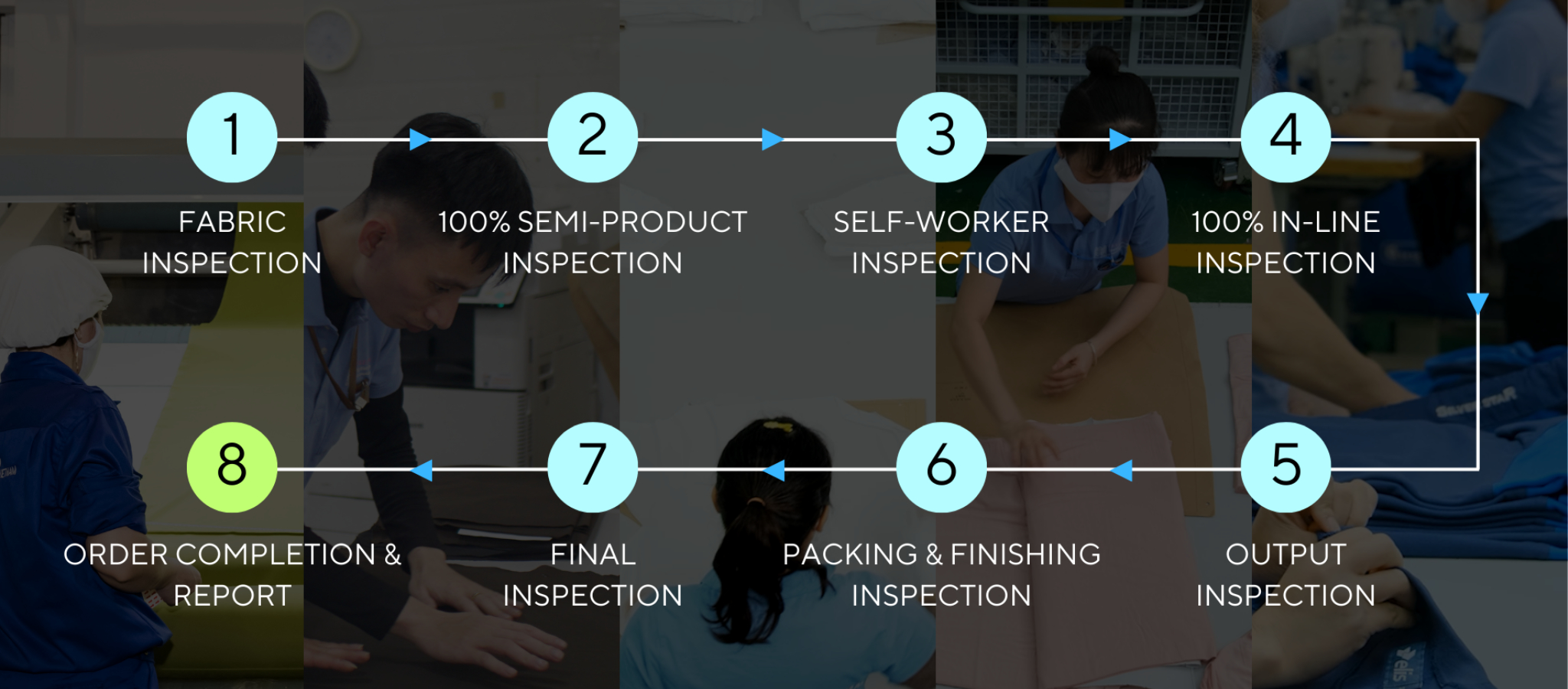 In large-scale cut-and-sew production, a standardized quality control system is built on a series of clear and repeatable inspection steps that help ensure consistency throughout the entire process
In addition, mid-line or in-process inspections are conducted to review semi-finished products. These checks help catch recurring issues or deviations early, so adjustments can be made before the full batch is completed.
Once production is finished, a final inspection (often based on AQL standards) is carried out. This step evaluates the finished garments for appearance, measurements, workmanship, and any defects. It ensures that the final output meets the required quality level before shipment.
Finally, a packing and final check is performed to confirm that the correct sizes, quantities, labeling, and packaging requirements are met. This last step ensures that everything is accurate and consistent before the goods are delivered to the brand.
Together, these standardized steps create a structured system that helps manufacturers maintain consistent quality, reduce defects, and ensure reliable results at scale.
Why Experienced Manufacturers Matter
Even if a brand has a strong R&D team, their experience in product development may not fully match the practical knowledge that an experienced clothing manufacturer brings to the table. Manufacturers work directly with production every day, giving them a deep understanding of how garments are actually made at scale. This is one of the reasons why leading athletic apparel manufacturers are often valued not only for their production capacity, but also for their technical expertise and ability to solve complex manufacturing challenges.
With this hands-on experience, manufacturers are often able to anticipate potential issues before they happen. They know where defects are likely to occur, how different materials behave during production, and what adjustments are needed to avoid common problems. This kind of foresight is difficult to achieve without years of working directly on the factory floor.
When issues do arise, experienced manufacturers also know how to respond quickly and effectively. Instead of simply identifying a problem, they can propose practical solutions, adjust the process, and minimize disruption to production. This ability to troubleshoot and optimize in real time is a key advantage when working at scale.
Of course, having skilled teams on both the brand side and the manufacturing side is important. However, in production, it’s impossible to predict every issue in advance. This is where experience becomes critical, because when unexpected problems occur, it is the manufacturer’s knowledge and problem-solving capability that ensures production can continue smoothly and quality can be maintained.
Maintaining consistent quality at scale requires more than good intentions – it requires the right systems, experienced teams, and a manufacturer who understands production from the inside out. Thygesen Textile Vietnam brings together structured quality control, efficient workflows, and hands-on manufacturing expertise to help brands scale with confidence. Learn more about Thygesen Textile Vietnam.